
A Caldera Filled with Seabirds
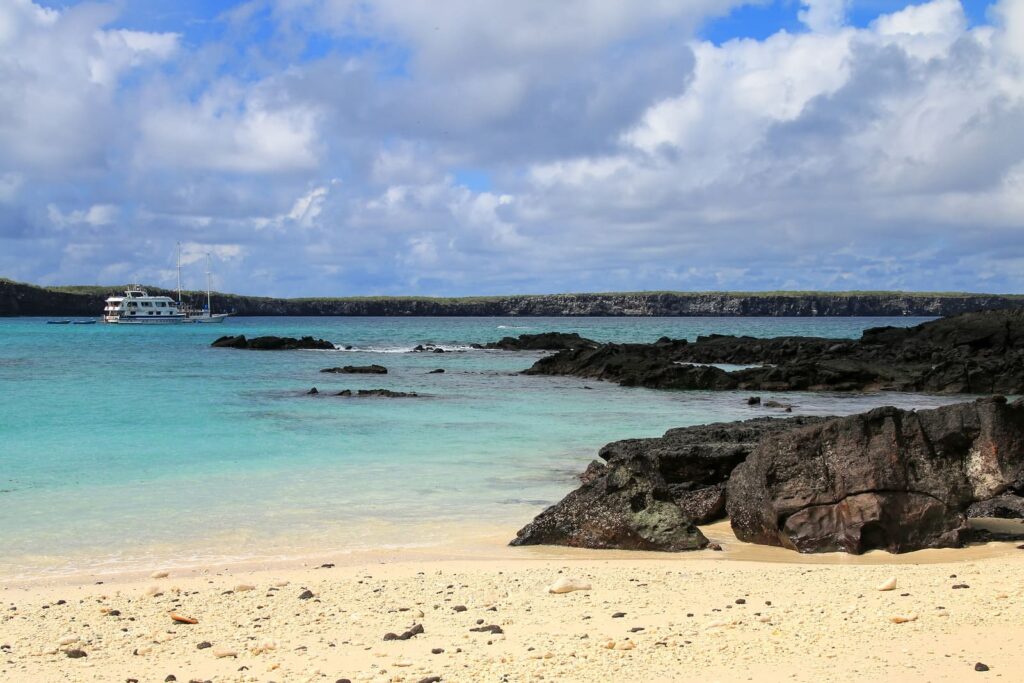
Genovesa is not a typical island. Most Galápagos landmasses are volcanic shields rising from the ocean floor in rough cones or ridgelines. Genovesa is the remains of a shield volcano whose summit collapsed inward, and the sea has since flooded that collapsed interior. The result is Darwin Bay — a broad, sheltered lagoon enclosed on three sides by the remnant caldera rim, open to the Pacific on the south. Arriving by cruise ship, passengers see nothing but flat ocean until the cliffs emerge, and then the vessel slides through the bay entrance into something that feels completely contained. The scale is intimate for a geological feature. The walls are close.
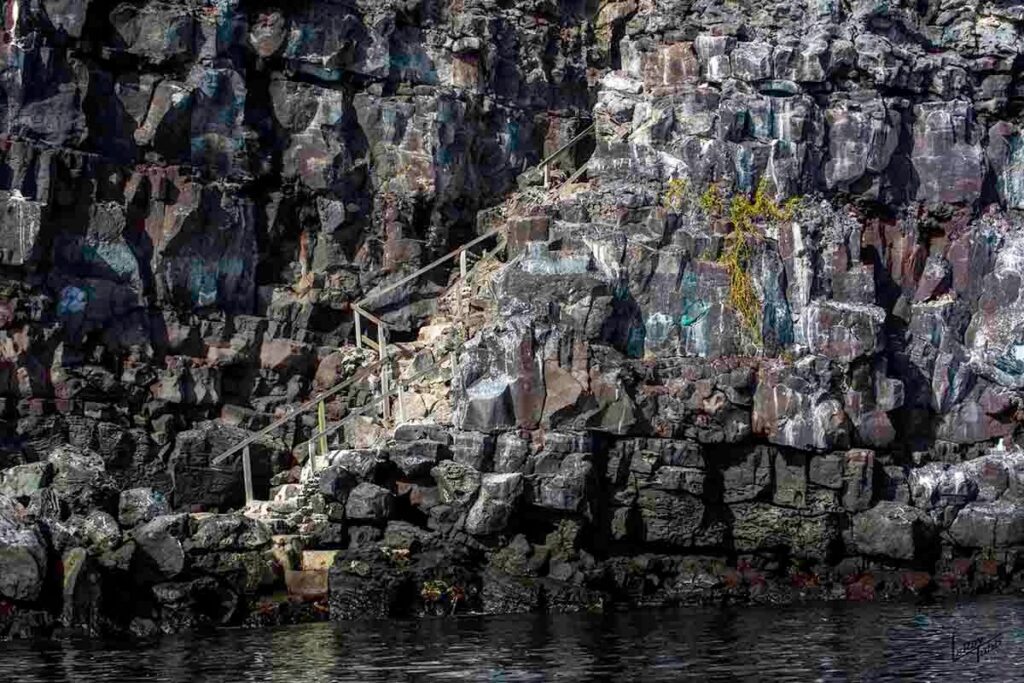
That geological accident created exactly the habitat that seabirds need. The cliffs provide nesting ledges inaccessible to predators. The sheltered bay moderates the swell, making the water calmer than the open Pacific outside. The Palo Santo trees and low scrub vegetation inside the caldera provide nesting substrate for species that build in trees — primarily red-footed boobies — while the bare lava fields on the plateau beyond the caldera rim accommodate ground-nesters: Nazca boobies, storm petrels, short-eared owls. The geometry of the place concentrates wildlife at densities that would be exceptional on any other island.
Most vessels depart for Genovesa overnight from Santa Cruz or San Cristóbal, arriving at dawn as the light catches the caldera rim. The approach is specific enough — narrow entrance, calm water beyond, walls of nesting birds already audible before you step into the panga — that experienced Galápagos travelers consistently describe it as one of the defining arrivals in the archipelago. This is not sentiment; it is geography producing a repeatable experience.
The island has no eruptions on record, though there is evidence of young lava flows on the outer flanks. It is geologically quieter than the western islands. What it does have, instead of active volcanism, is the accumulated effect of thousands of years of uninterrupted seabird colonization — the guano-enriched soil, the worn paths between nesting sites, the sheer weight of biology packed into 14 square kilometers. Genovesa is not a geological spectacle. It is a biological one.