

Six Volcanoes, One Island
Long ago, Isabela started as six separate volcanic shields, each rising independently from the ocean floor over millions of years. Over time, their flanks merged into the seahorse-shaped landmass that exists today. These six volcanoes are now called: Ecuador, Wolf, Darwin, Alcedo, Sierra Negra, and Cerro Azul. All except Ecuador are still active.
Wolf Volcano, at 5,600 ft, is the highest point in the entire Galápagos archipelago. In an impressive geological coincidence, both the Wolf and Ecuador volcanoes straddle the equator. This makes Isabela the only island in the world where visitors can stand on the equatorial line in active volcanic terrain.
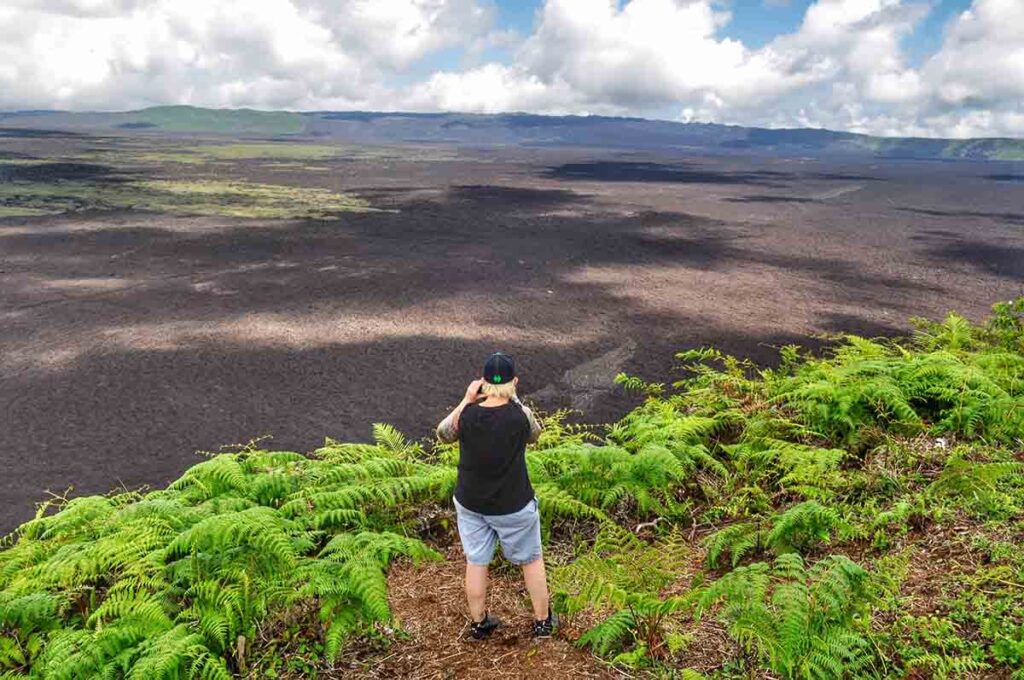
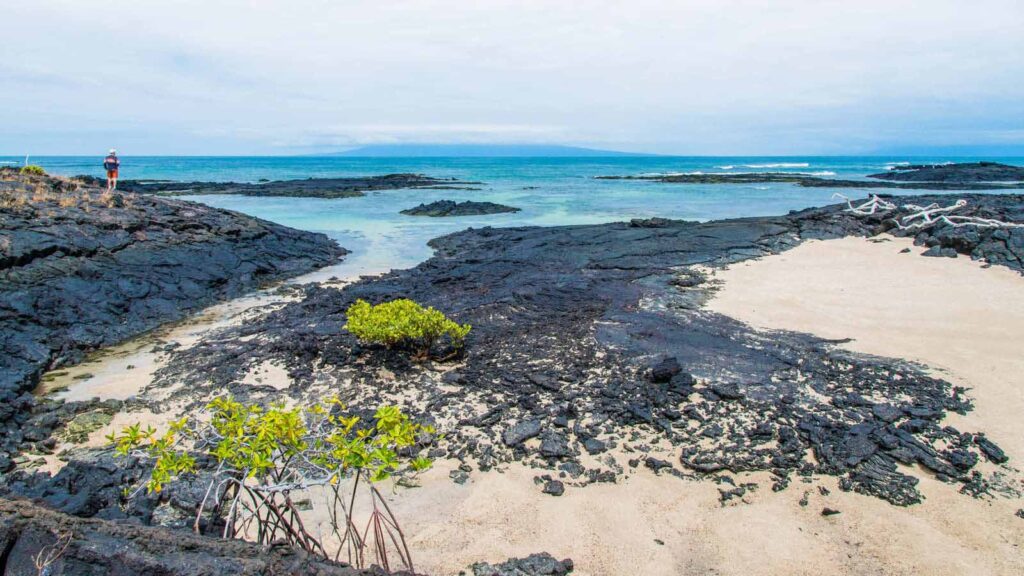
Sierra Negra’s caldera deserves special mention, as it is the second-largest volcanic caldera on Earth. Evidence of its most recent eruption in 2018 is evident in the rim trail’s fresh basalt flows, heat-cracked rock, and newly disrupted terrain. The caldera rim makes visitors stop in their tracks as they take in not just its beauty, but also the magnitude of its vastness.
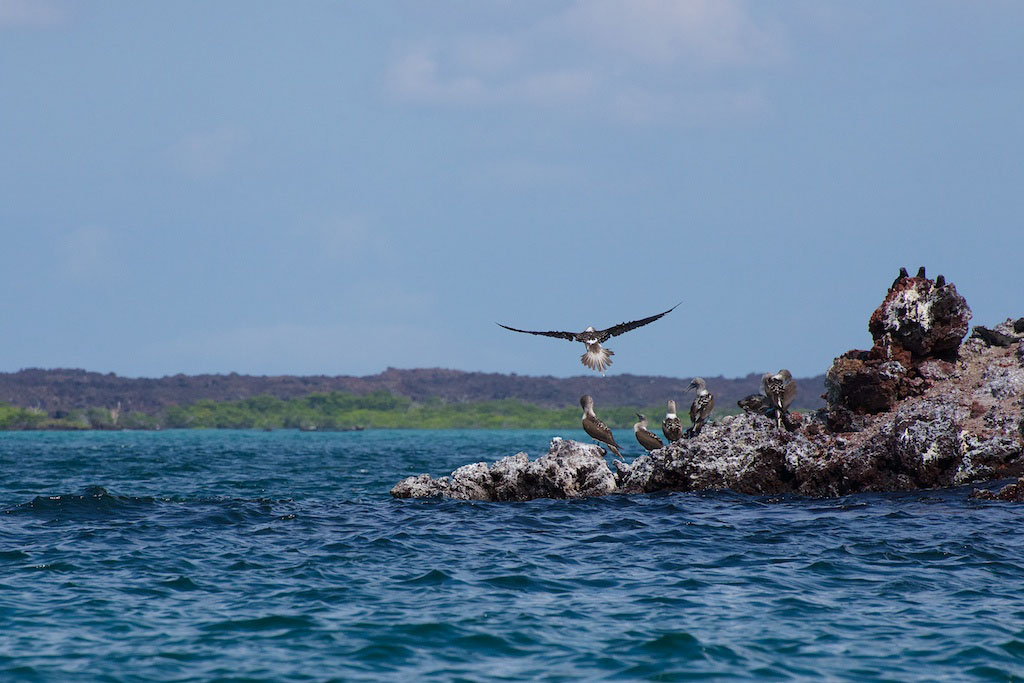
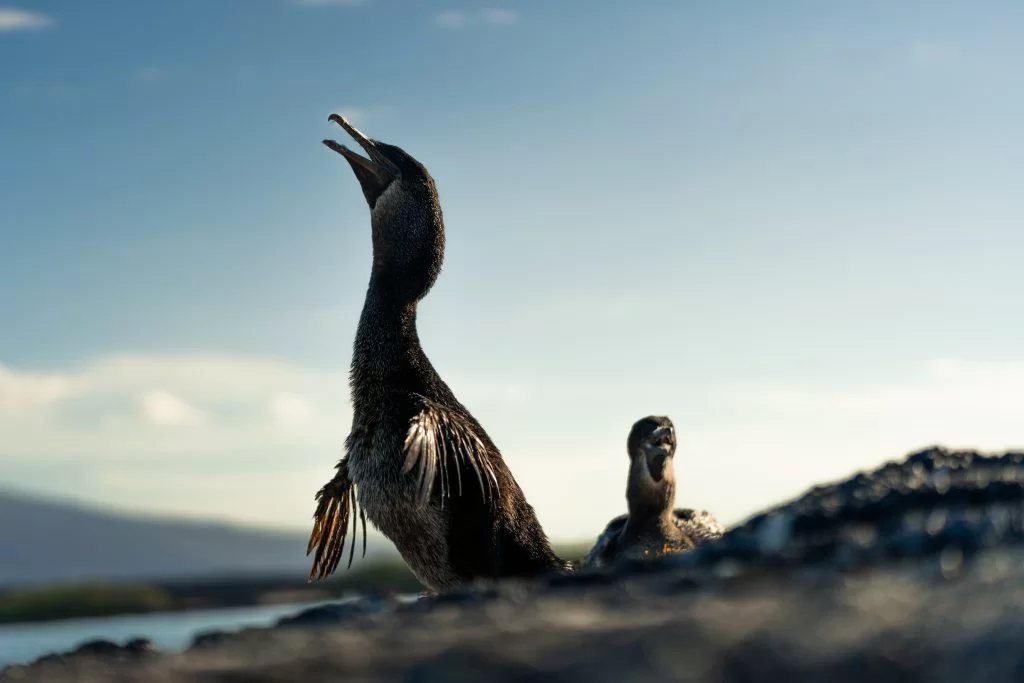
The Cromwell Current, a deep-water equatorial current, flows upward and brings cold, nutrient-rich water to the surface of the west coast. This phenomenon happens only on this island, creating a bountiful feeding ground supporting marine life. The Bolivar Channel, the narrow strait between Isabela and Fernandina, has the coldest waters in the archipelago and is an ideal wildlife hotspot.
Isabela is a volcanically active island. The Galápagos National Park Service (GNPS) monitors eruption status and can close visitor sites without advance notice. Travelers who are planning to hike on Sierra Negra or visit the west coast sites on a cruise should check the current conditions with their operator first before departure.