Santa Cruz Island — The Complete Galápagos Visitor Guide

Santa Cruz is the most popular island and home to Puerto Ayora, the largest town in the Galápagos. Here, travelers can visit the Charles Darwin Research Station or take a stroll next to roaming giant tortoises at El Chato Highland Reserve. It is also a logistics center for most Galápagos itineraries. This page covers all there is to know about Santa Cruz, the bustling island at the center of the archipelago and of most Galápagos trips.

Santa Cruz at a Glance

The Charles Darwin Research Station

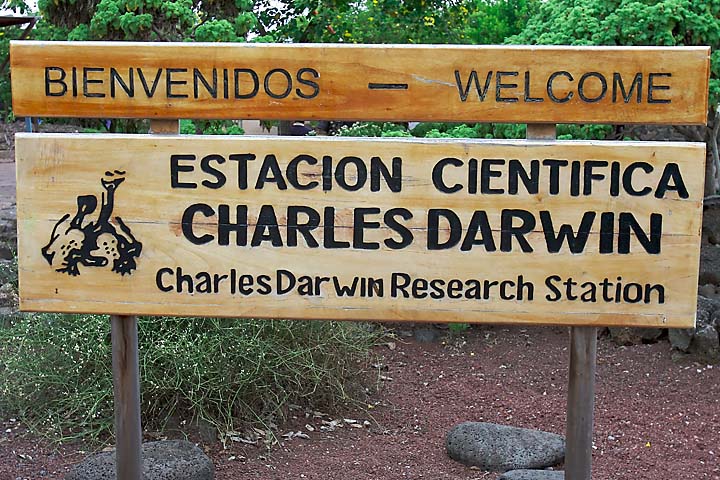
A research station on the eastern edge of Puerto Ayora, which is a five-minute walk from the main pier. Founded in 1959 by the Charles Darwin Foundation, it is open every day with no entrance fee. This research station is the most visited attraction in the Galápagos, and it is actively driving the archipelago’s conservation efforts.

The Fausto Llerena Tortoise Breeding Center is the main highlight. Outdoor enclosures allow visitors to walk beside hatchlings, juveniles, and adults in different giant tortoise subspecies, including those from islands where wild populations once collapsed. The most memorable resident is Diego, a male Española tortoise repatriated from the San Diego Zoo in 1977, who fathered a large fraction of today’s restored Española tortoise population. He was returned to the wild on Española in 2020 after the program was declared a success.

Lonesome George is another honored symbol, the last Pinta Island tortoise who died on June 24, 2012, and whose preserved body is now on permanent display in a climate-controlled hall. The station also handles Darwin’s finches, marine iguanas, invasive species control, and tortoise reintroduction genetics.

Through captive breeding and repatriation programs by the Charles Darwin Research Station, Galápagos giant tortoise populations have risen from roughly 8,000–14,000 individuals in the 1970s to approximately 20,000–25,000 today.
El Chato Highland Reserve

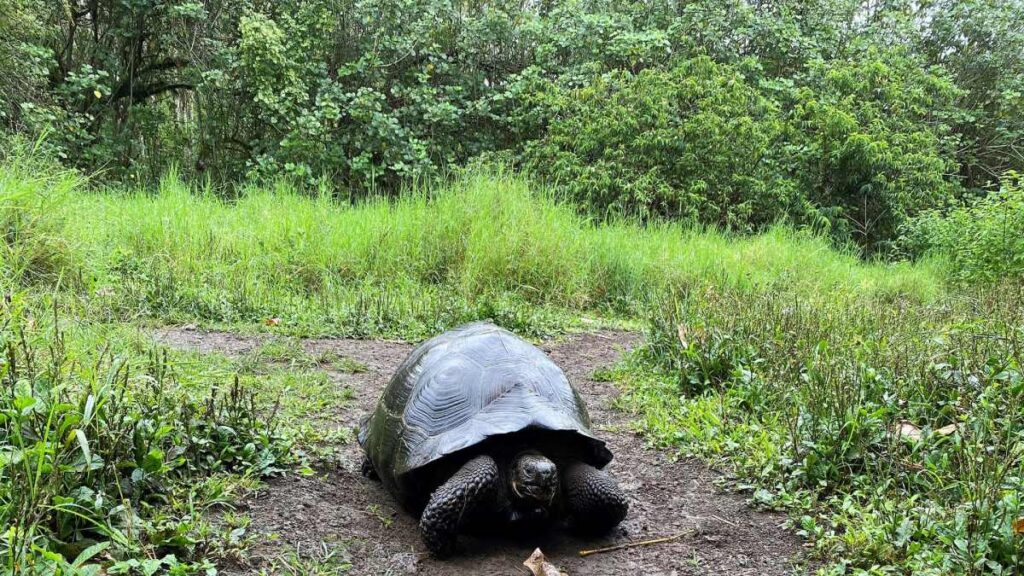
El Chato sits in the lush highlands on the southern side of Cerro Crocker. Getting there takes 45 minutes by taxi from Puerto Ayora. It is one of the best places for visitors to walk among giant tortoises in the wild. Tortoises move freely on private farmland and adjacent national park territory, grazing, wallowing in muddy ponds, and following ancient migration paths. 

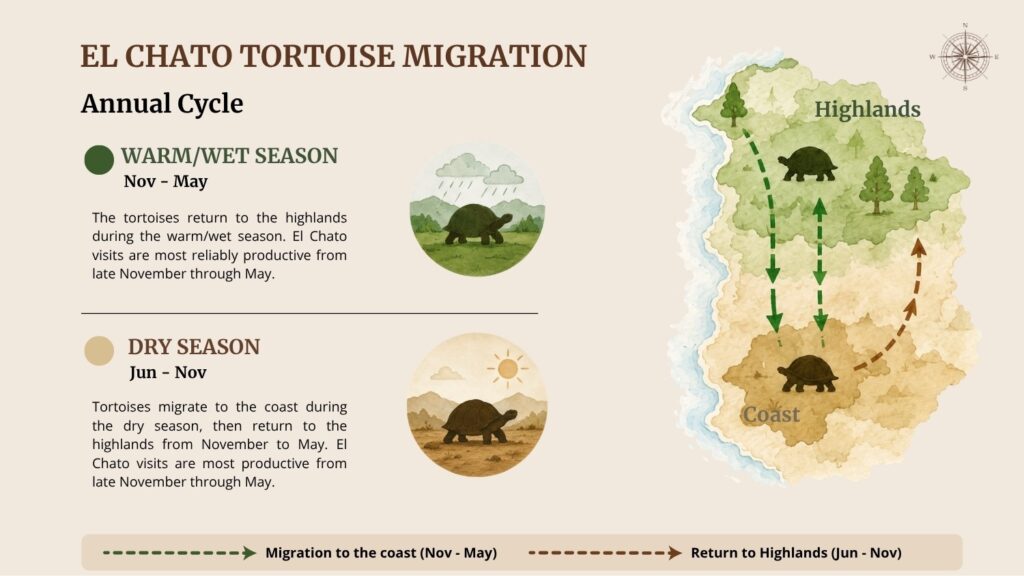
Tortoises appear seasonally. They migrate to the coast from June to November (dry season) and return to the highlands from November to May (warm/wet season). Visiting El Chato between late November and May guarantees productive viewing. 

The highland zone, at 300-500m elevation, receives regular mist and rain, making it a green, humid landscape. It’s a stark contrast from the dry coastline below. The terrain features Scalesia forest patches, giant Opuntia cacti, and open grassland. It is a great place for bird watching, with Vermilion flycatchers, medium ground finches, and Galápagos rails regularly seen on the trail. 

The reserve is a privately owned farmland that allows guided tours departing from Puerto Ayora between 08:00 and 09:00. Unlike the visitor sites on the coastline, a naturalist guide is not required by park regulation at El Chato, but local guides make finding tortoises more efficient and provide excellent ecological context. 

El Chato Tortoise Migration Map

El Chato Tortoise Migration MapView full ↗

Tortuga Bay

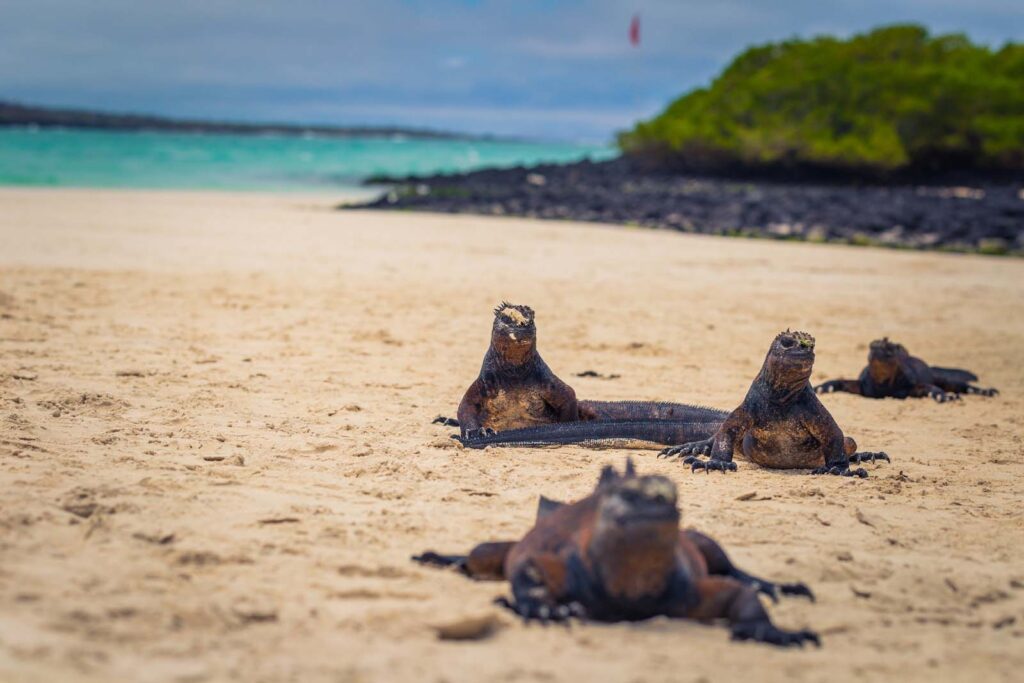
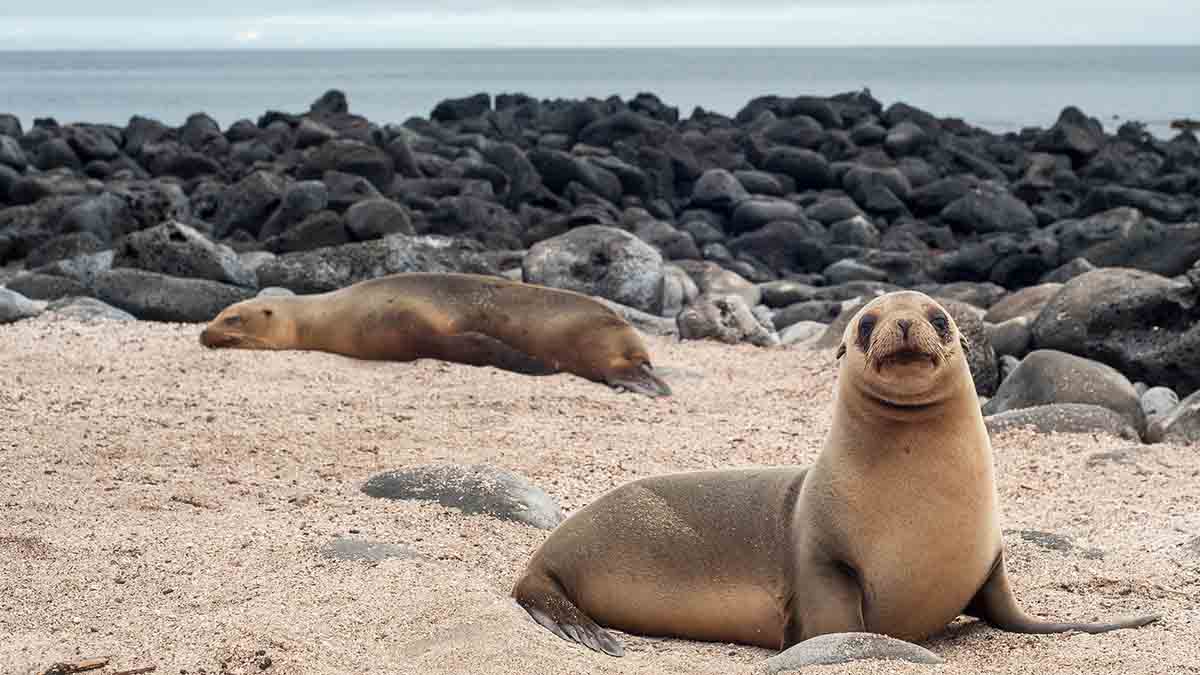
Tortuga Bay is a 1.5km white beach, 40 minutes away on foot from Puerto Ayora. There is no vehicle access, so walking is the only way to reach it. The beach is one of the best in Ecuador, free to enter with your passport and a park entrance card. Swimming is not allowed in the main beach, Playa Brava, due to strong currents and sharks. The inner lagoon, Playa Mansa, is calmer and is a designated swimming area, with marine iguanas sunbathing on the sand and white-tipped reef sharks in the shallows. Sea lions are also commonly seen along the coast.

What to Bring to Tortuga Bay

  • Water (no services on the beach)
  • Sunscreen (reef-friendly only in the Galápagos Marine Reserve)
  • Passport or park entrance card
  • Start before 10:00 to avoid peak heat
×

Visitor Sites

Visitor Site
Access
Key Wildlife
Notes
Charles Darwin Research Station

Charles Darwin Research Station

Land-based
Free, walk from Puerto Ayora
Giant tortoises (breeding center), marine iguanas, Darwin’s finches
Open daily with free entry
El Chato Highland Reserve

El Chato Highland Reserve

Land-based
Taxi (~$30 round trip)
Wild giant tortoises, vermilion flycatchers, Galápagos rails
Best Nov–May for tortoise sightings
Tortuga Bay

Tortuga Bay

Land-based
40-min walk from town
Marine iguanas, white-tipped reef sharks, sea turtles
Free; reef-safe sunscreen required
Black Turtle Cove

Black Turtle Cove

Cruise-only
Boat access only (cruise or day tour)
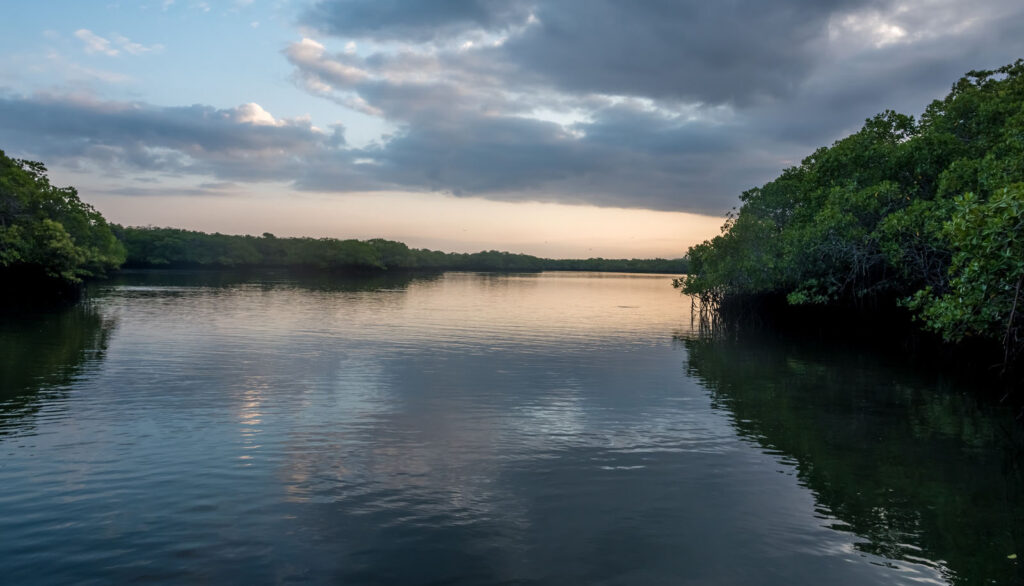
Marine turtles, sharks, rays
Paddle or zodiac only — no motor access
Las Grietas

Las Grietas

Land-based
25-min walk + short boat crossing
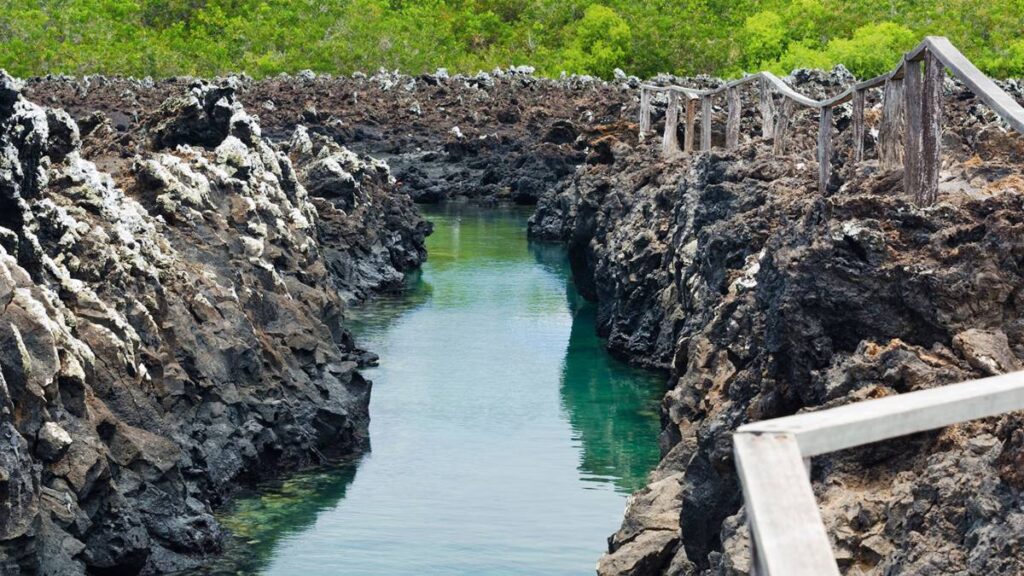
Snorkeling in volcanic fissure pools
No park guide required; popular with locals
Cerro Dragón

Cerro Dragón

Cruise-only
Cruise/day tour
Land iguanas, flamingos
Western Santa Cruz coast; less visited

Getting to Santa Cruz

Since Santa Cruz doesn’t have an airport, visitors choose between two routes to get to the island.

The standard route is to fly first into Seymour Airport on the neighboring island of Baltra. From there, travelers board a shuttle to the Itabaca Channel and cross to Santa Cruz on a five-minute ferry. They can then head to Puerto Ayora by public bus or private transport. Travel can take 45 minutes for tight connections to 90 minutes with luggage.

The alternative route is to fly into San Cristóbal Airport, then take an inter-island speedboat ferry to Puerto Ayora (~2 hours, $30–45 USD one-way). This suits travelers with multiple islands on their itinerary or those whose last stop for their cruise is San Cristóbal.

Mainland flights operate from Quito (Mariscal Sucre International) or Guayaquil (José Joaquín de Olmedo International) with LATAM and Avianca. Flight time is approximately 2 hours & 15 minutes from Quito (typically including a brief technical stopover in Guayaquil) and 1 hour & 30 minutes from Guayaquil. Round-trip airfare is $300–500 USD, depending on the season and time of booking. Quito departures typically stop in Guayaquil for refueling.

Logistics Note

Morning flights from Quito and Guayaquil arrive in Baltra between 10:30 and 11:30. Most guests reach Puerto Ayora by afternoon, leaving time for Charles Darwin Avenue, the fish market, or the Darwin Station itself. A full day of adventure is for the highlands or Tortuga Bay, while strenuous activities should be scheduled before departure day, as flights from Baltra leave in the morning.

All visitors must purchase a Galápagos Transit Control Card (INGALA card) for $20 USD at the mainland departure airport before checking in.

Where to Stay

Puerto Ayora accommodations range from budget guesthouses to boutique hotels. Travelers on land-based itineraries usually choose to stay in this town. Key areas include:

Along Charles Darwin Avenue

This main waterfront strip is within walking distance to the pier, the Darwin Station, and most restaurants. Prices start from $40 to 250/night depending on the category and season.

Santa Cruz Highlands Lodges

There are several eco-lodges in the highland zone, 30–40 minutes from town. They’re closer to El Chato, quieter, and often surrounded by tortoise habitat. The price range is $120–400/night.

Plan Your Visit
Travel trade

Latin Trails (DMC partner)

Latin Trails operates FIT and group programs based in Santa Cruz. Contact the DMC team for net rates, private transfers, and custom highland itineraries.

Latin Trails — contact the DMC team →

Frequently Asked Questions

Is Santa Cruz the best island to base yourself in the Galápagos?

For most visitors, yes. Santa Cruz has the widest options for accommodations and restaurants and the best land-based day trips, with direct access to the ferry for Baltra departures. San Cristóbal is the alternative hub, a smaller town with a different wildlife experience.

How long should I spend on Santa Cruz?

For land-based visitors, allot 2-3 days to explore the Charles Darwin Research Station, El Chato, and Tortuga Bay without rushing. Cruise travelers normally spend one night or stay after their voyage, with enough time to visit at least the Charles Darwin Research Station.

Can I see giant tortoises in the wild on Santa Cruz?

Yes, El Chato Highland Reserve is the most accessible location in the Galápagos to walk freely among fully wild giant tortoises. The Darwin Station’s Fausto Llerena Center also has tortoises, but those are in a managed breeding program.

Do I need a naturalist guide to visit Santa Cruz independently?

A certified naturalist guide is required at all National Park visitor sites, including the Darwin Station coastal trail and all offshore visitor sites accessible by boat. El Chato and Tortuga Bay do not require a park guide, though local guides improve the experience significantly at El Chato.