Isabela Island, Galápagos — The Complete Visitor Guide

Juan Magallanes, Naturalist Expert Contributor

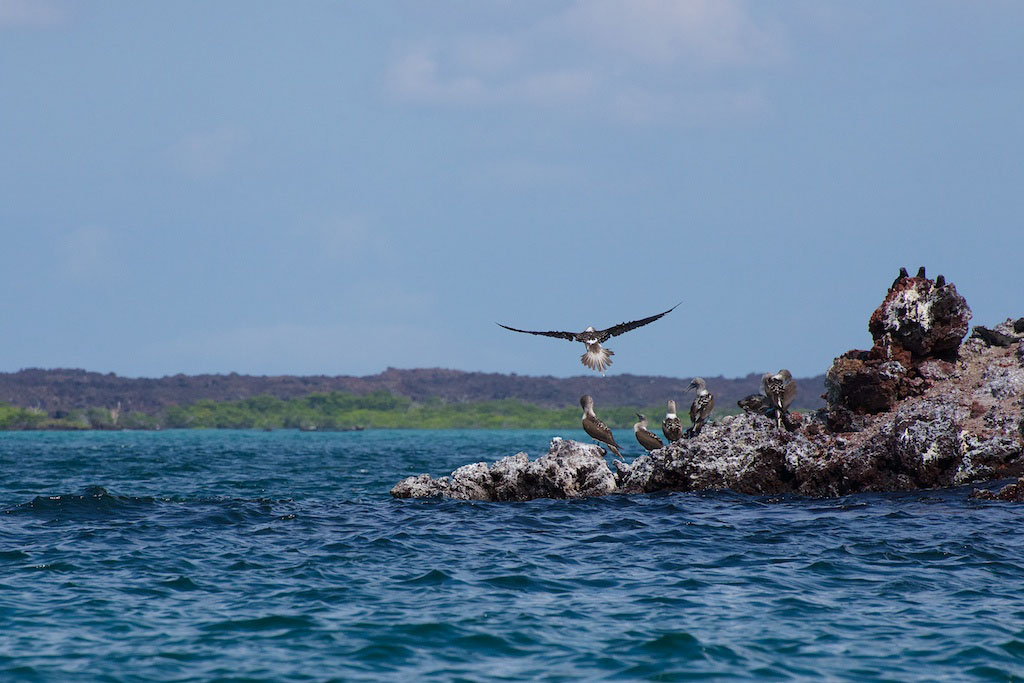
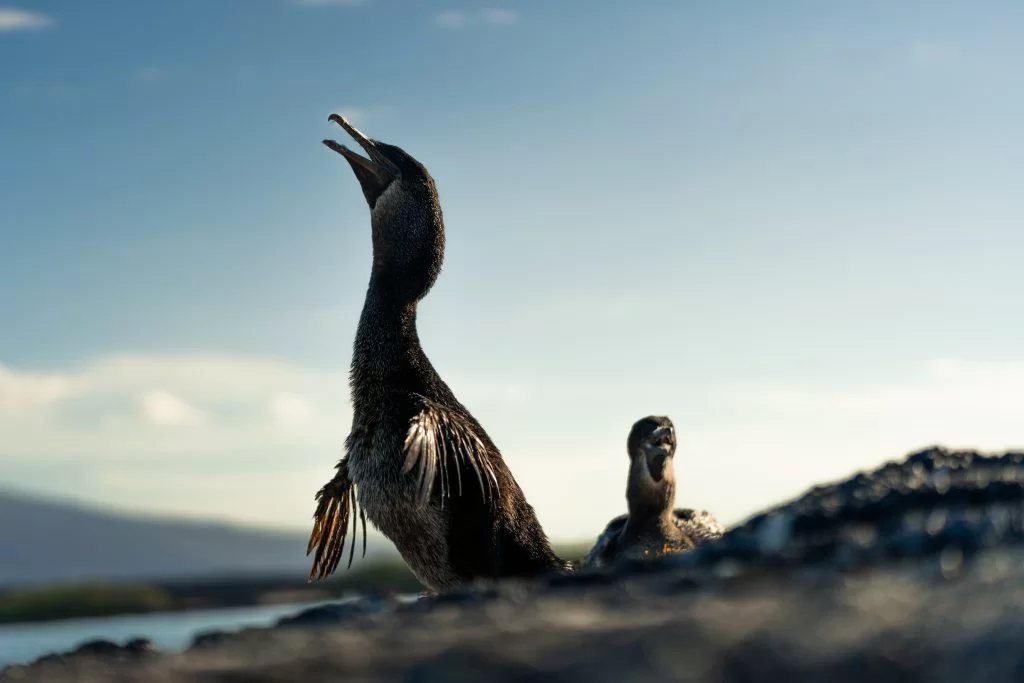
Isabela Island is the largest of the Galápagos Islands at 4,670 km², formed by six shield volcanoes — five of which remain active. It holds more wild giant tortoises than all other islands combined, and its west coast is the only place on Earth where Galápagos penguins and flightless cormorants share the same shoreline.

The Island at a Glance

Before the specifics, a quick reference table for the facts most travelers need first.

Six Volcanoes, One Island

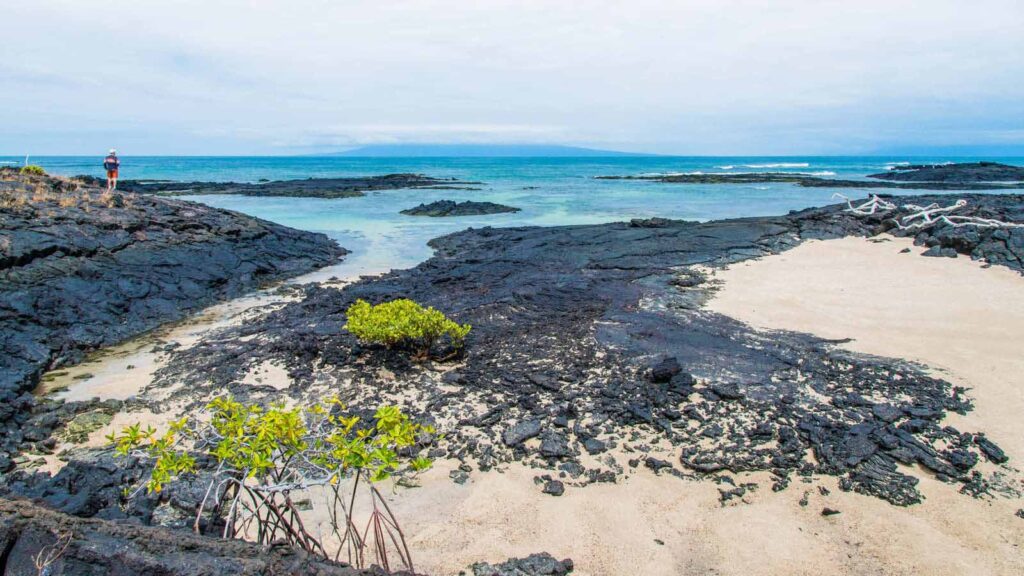
Isabela did not start as one island. It was six separate volcanic shields, each rising independently from the ocean floor over millions of years, until their flanks merged into the seahorse-shaped landmass that exists today. Running north to south, those six volcanoes are: Ecuador, Wolf, Darwin, Alcedo, Sierra Negra, and Cerro Azul. All except Ecuador remain active.

Wolf Volcano, at 1,707 m (5,600 ft), is the highest point in the entire Galápagos archipelago. Wolf and Ecuador Volcanoes both straddle the equator — a geological coincidence that makes Isabela the only island in the world where visitors can stand precisely on the equatorial line in active volcanic terrain.

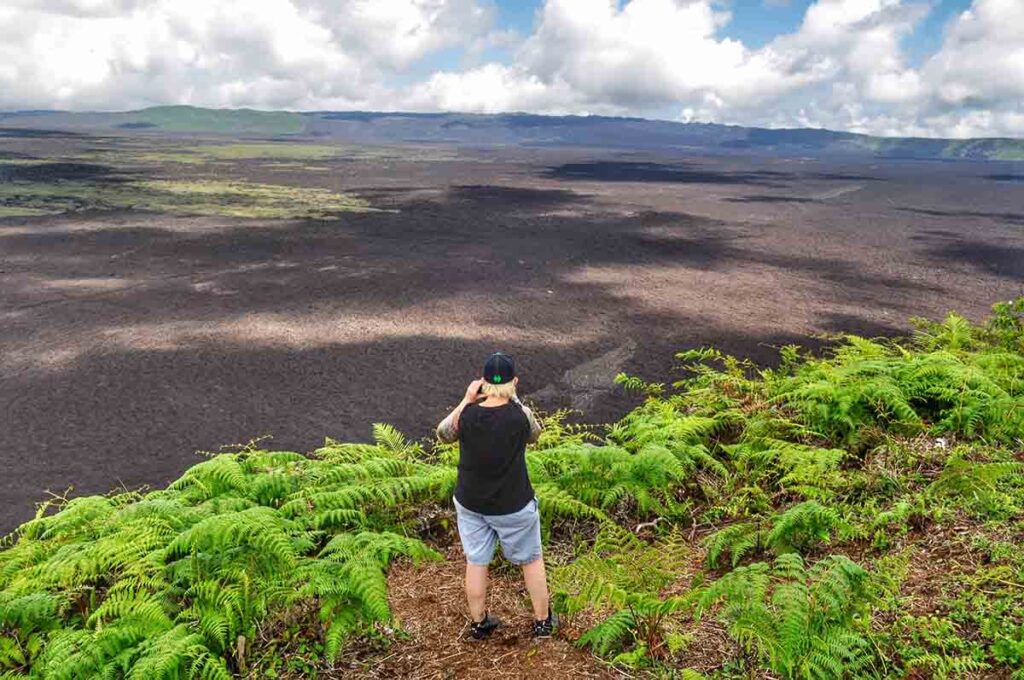
Sierra Negra’s caldera deserves a specific note because the number is genuinely striking: 10 km wide by 9 km — the second-largest volcanic caldera on Earth. It last erupted in 2018, and the evidence is visible on the rim trail: fresh basalt flows, heat-cracked rock, terrain that looks recently disturbed because it was. This is not ancient geology on display. The caldera rim at Sierra Negra stops you mid-step — not because it’s beautiful (though it is), but because the scale refuses to compress into the frame of a normal landscape.

On the west coast, two oceanographic forces produce conditions found nowhere else in the archipelago. The Cromwell Current — a deep-water equatorial current — upwells along Isabela’s west coast, dragging cold, nutrient-dense water to the surface. This feeding ground supports marine life at concentrations unusual even for the Galápagos. The Bolívar Channel, the narrow strait between Isabela and Fernandina, holds the coldest waters in the archipelago — and some of its most productive wildlife habitat.

One practical note: this is a volcanically active island. The Galápagos National Park Service (GNPS) monitors eruption status and can close visitor sites without advance notice. While all Isabela volcanoes are currently stable and open under standard Green/Normal alert levels, travelers planning the Sierra Negra hike or west coast cruise sites should check current conditions with their operator before departure.

Visitor Sites

Land-Based

The following sites are accessible from Puerto Villamil without a multi-day cruise. They cover genuine ecological diversity — this is not a consolation itinerary. But there are specific species and locations that genuinely cannot be reached without cruise access, and that gap is noted honestly where relevant.

Cruise-Only

These six sites account for much of what makes Isabela Island a priority destination for serious wildlife travelers — and all of them require a cruise itinerary that specifically includes the west side of Isabela. Not every cruise does. When researching itineraries, check explicitly whether Tagus Cove, Punta Albemarle, Elizabeth Bay, Punta Vicente Roca, Urbina Bay, and Moreno Point are included. Cruises Seaman Journey

Getting to Isabela

There are two ways to reach Puerto Villamil: by boat from Santa Cruz, or by small aircraft. Neither is direct from the mainland. All travelers to the Galápagos transit through Quito or Guayaquil first, then fly to Baltra or San Cristóbal.

By Speedboat from Santa Cruz

The speedboat crossing from Puerto Ayora (Santa Cruz) to Puerto Villamil runs approximately 2.5 hours. Multiple departures are typically available daily in each direction — early morning departures are standard. The crossing is on the open ocean and can be rough depending on season; the cold-season swells (June–November) are more pronounced than in the warm season.

By Small Aircraft

Small aircraft connect Puerto Villamil (Isabela) with Baltra and San Cristóbal. EMETEBE Airlines and Fly Galapagos are the primary operators on these routes, though operator availability and frequency should be confirmed at the time of booking. Flights are short (under 45 minutes), and seat availability is limited — book well in advance.

Cruise travelers arriving directly to Isabela do so by vessel — their cruise ship will anchor offshore and transfer guests by panga. Port logistics are managed by the cruise operator.

Galapagos Entry Requirements Permits →

When to Visit

Best Time to Visit

The Galápagos has two broad seasons, and Isabela’s wildlife distribution shifts meaningfully between them.

Neither season is objectively better for Isabela as a whole — the wildlife calendar simply shifts. If the flightless cormorant and west coast whale-watching are the primary objectives, June through October is the peak window. If the tortoise breeding center and calmer seas are priorities, December through April works well.

Best Time To Visit →See the seasonal wildlife calendar ↓

Where to Stay

Accommodation in Puerto Villamil

Puerto Villamil has no large resort infrastructure. Accommodation is primarily small hotels, guesthouses, and B&B-style properties — most within walking distance of the beach, the wetlands boardwalk, and the departure point for Las Tintoreras. The town has a main street with restaurants, beach bars, and a small church decorated with marine motifs. The pace is unhurried in a way that Santa Cruz no longer is.

Wildlife — What Lives Here and Where

Isabela’s wildlife divides cleanly into two categories: what you can access from Puerto Villamil on a land-based trip, and what requires a multi-day cruise to the west coast. That distinction matters enormously — not in terms of which is better, but in terms of which species are only accessible one way.

Wildlife Calendar

Plan Your Visit

Isabela can be visited land-based, as part of a cruise, or both. The right channel depends on how you are traveling and whether you are booking directly or working through a travel professional.

Direct travelers

Book with Voyagers Travel Company

Voyagers Travel Company matches independent travelers to the right Isabela itinerary — land-based stays in Puerto Villamil, cruises that include west coast sites, or combined trips. Current vessel availability, honest itinerary advice, and no generic aggregator markup.

Contact Voyagers Travel Company →
Travel trade

Latin Trails (DMC Partner)

Latin Trails is a licensed Galápagos destination management company offering net rates, group allocations, and private charter options for tour operators and wholesalers. Industry inquiries, FIT packages, and trade pricing through the DMC channel.

Contact Latin Trails →

Frequently Asked Questions

Is Isabela Island worth visiting on a land-based trip?

Yes — with an honest qualification. The Arnaldo Tupiza Tortoise Breeding Center, the Sierra Negra volcano hike, Las Tintoreras, and the wetlands complex are all genuine wildlife experiences that stand on their own merits. Two to three days in Puerto Villamil is not a wasted trip. What a land-based visit cannot provide is access to the west coast: no flightless cormorants in the wild, no whale-watching in the Cromwell upwelling, no Punta Vicente Roca, no Tagus Cove. For travelers with specific wildlife objectives that include those species and sites, a cruise itinerary covering west Isabela is the only solution.

How do I get to Isabela Island from Santa Cruz?

By speedboat from Puerto Ayora to Puerto Villamil — approximately 2.5 hours on the open ocean. Multiple departures are typically available each morning. The crossing can be rough during the cold season (June–November). Small aircraft from Baltra or San Cristóbal offer an alternative — shorter journey, but limited seats and less frequent schedules. Book both modes in advance during peak season.

Can I see flightless cormorants from Puerto Villamil?

No. Flightless cormorants nest exclusively on the west coast of Isabela (Punta Albemarle, Tagus Cove) and on Fernandina — both reachable only by multi-day cruise. There are approximately 1,000 breeding pairs of this species on Earth. All of them live in locations that require overnight cruise access. No day tour, water taxi, or charter from Puerto Villamil reaches these sites. This is a GNPS regulatory boundary, not a logistical workaround.

How long should I spend on Isabela?

For a land-based visit: two to three days covers Las Tintoreras, the tortoise breeding center, the wetlands, and the Sierra Negra hike comfortably — three days if you want time to do the volcano hike properly and not rush. For a cruise that includes west Isabela: most itineraries allocate two to three days to west coast sites (Tagus Cove, Urbina Bay, Elizabeth Bay, Punta Vicente Roca, Punta Albemarle). A combined trip — arriving by boat from Santa Cruz, spending time in Puerto Villamil, then continuing by cruise — is logistically possible and covers both access modes.

What makes Isabela different from other Galápagos islands?

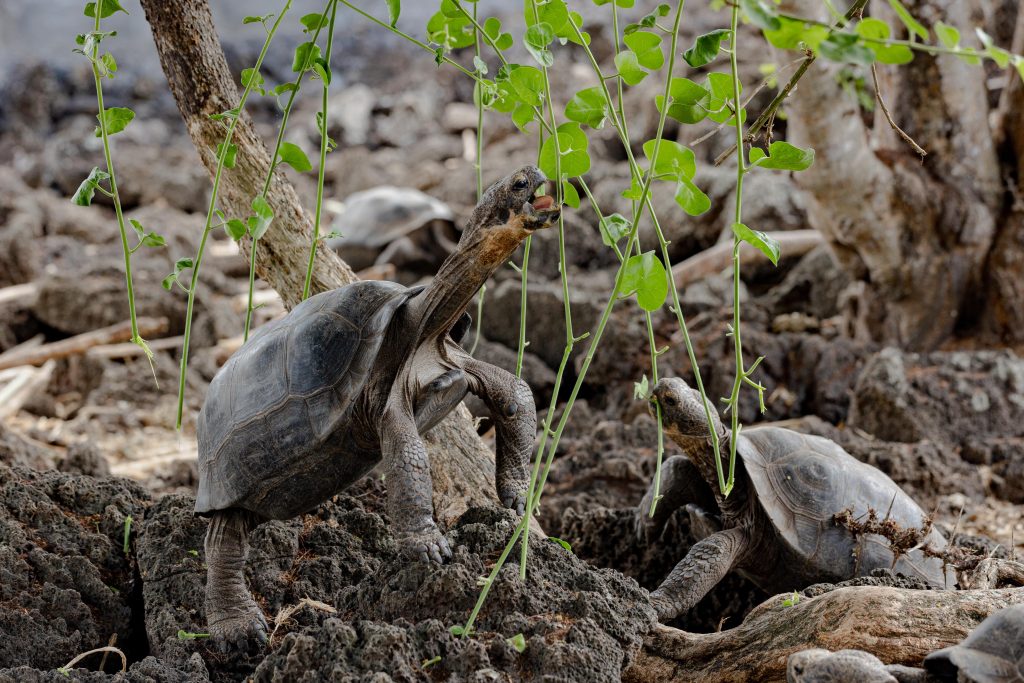
Scale and geological activity, primarily. At 4,670 km², Isabela is larger than every other Galápagos island combined — the scale of the caldera at Sierra Negra, the distance between the northern and southern volcanoes, the breadth of the west coast are all in a different register from other islands. The six-volcano structure means six distinct giant tortoise subspecies on a single island — something no other island replicates. The Cromwell Current upwelling produces wildlife concentrations (16 identified whale species, Mola mola, flightless cormorants) that are specific to this west coast oceanographic system. Isabela is not simply a larger version of Santa Cruz. It is ecologically distinct.