
Genovesa Island — The Galápagos' Premier Seabird Colony

Juan Magallanes, Naturalist Expert Contributor

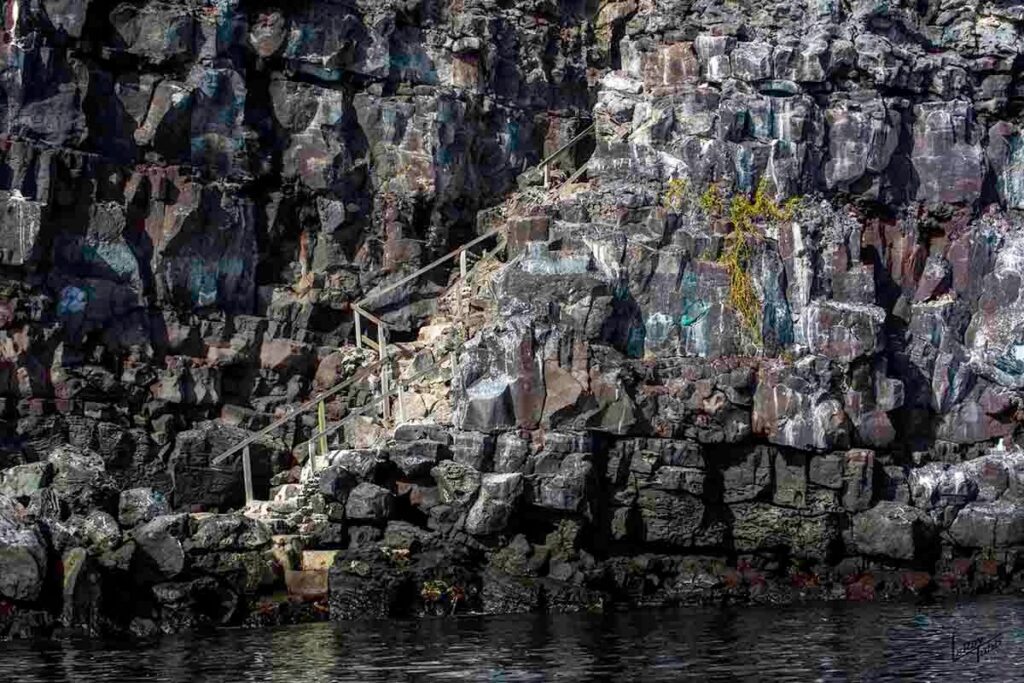
Genovesa (Tower Island) is the northernmost island in the Galápagos and home to the largest red-footed booby colony in the archipelago. The island's flooded caldera forms Darwin Bay, a sheltered lagoon surrounded by seabird nesting sites. Both visitor sites — Darwin Bay Beach and Prince Philip's Steps — require a multi-day cruise; no day tours reach Genovesa.

At a Glance

Quick-reference facts for travelers planning their itinerary.

A Caldera Filled with Seabirds

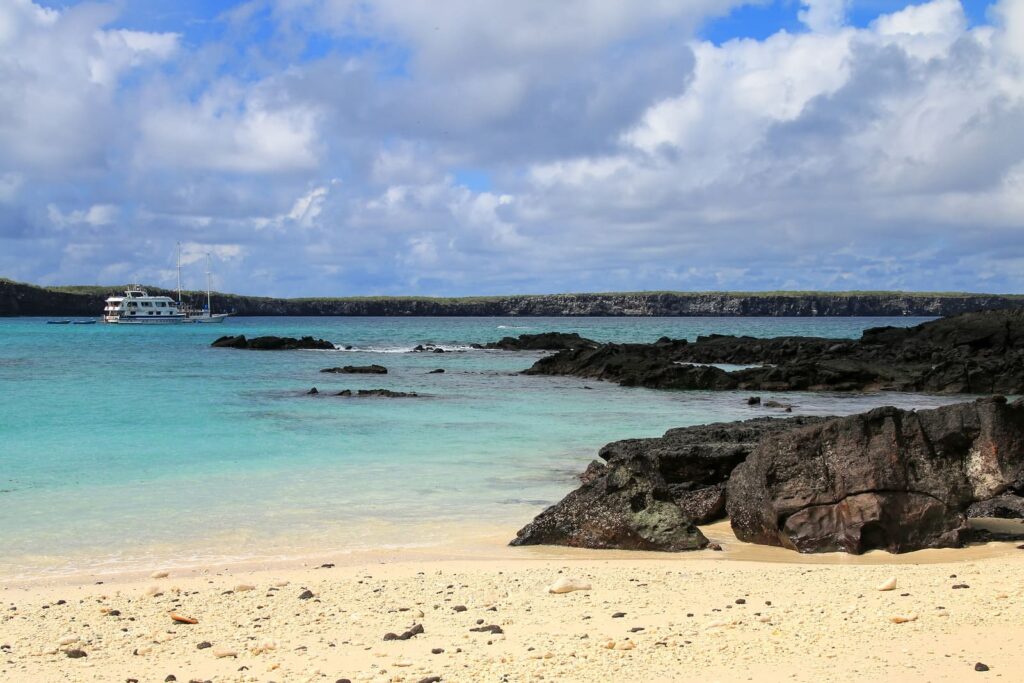
Genovesa is not a typical island. Most Galápagos landmasses are volcanic shields rising from the ocean floor in rough cones or ridgelines. Genovesa is the remains of a shield volcano whose summit collapsed inward, and the sea has since flooded that collapsed interior. The result is Darwin Bay — a broad, sheltered lagoon enclosed on three sides by the remnant caldera rim, open to the Pacific on the south. Arriving by cruise ship, passengers see nothing but flat ocean until the cliffs emerge, and then the vessel slides through the bay entrance into something that feels completely contained. The scale is intimate for a geological feature. The walls are close.

That geological accident created exactly the habitat that seabirds need. The cliffs provide nesting ledges inaccessible to predators. The sheltered bay moderates the swell, making the water calmer than the open Pacific outside. The Palo Santo trees and low scrub vegetation inside the caldera provide nesting substrate for species that build in trees — primarily red-footed boobies — while the bare lava fields on the plateau beyond the caldera rim accommodate ground-nesters: Nazca boobies, storm petrels, short-eared owls. The geometry of the place concentrates wildlife at densities that would be exceptional on any other island.

Most vessels depart for Genovesa overnight from Santa Cruz or San Cristóbal, arriving at dawn as the light catches the caldera rim. The approach is specific enough — narrow entrance, calm water beyond, walls of nesting birds already audible before you step into the panga — that experienced Galápagos travelers consistently describe it as one of the defining arrivals in the archipelago. This is not sentiment; it is geography producing a repeatable experience.

The island has no eruptions on record, though there is evidence of young lava flows on the outer flanks. It is geologically quieter than the western islands. What it does have, instead of active volcanism, is the accumulated effect of thousands of years of uninterrupted seabird colonization — the guano-enriched soil, the worn paths between nesting sites, the sheer weight of biology packed into 14 square kilometers. Genovesa is not a geological spectacle. It is a biological one.

Visitor Sites

Land-Based

Genovesa has two visitor sites, both accessible from the bay. A full day at the island typically covers both, one in the morning and one in the afternoon.

Getting There

Genovesa is approximately 95 km northeast of Santa Cruz — further from the central islands than any other commonly visited site in the archipelago. There is no airport, no ferry service, and no day-tour access. The only way to visit Genovesa is aboard a multi-day cruise vessel that specifically includes it in the itinerary.

The passage from Santa Cruz or San Cristóbal takes 8–10 hours by sea. Vessels almost always make this crossing overnight, departing in the evening and arriving at dawn. For most passengers, the first view of Genovesa is the caldera rim appearing out of the low morning light — a deliberate approach time that experienced cruise operators preserve because the landing inside the bay at dawn is one of the defining experiences of a northern itinerary.

The overnight sail and the overall distance from the central circuit are the reasons Genovesa rarely appears in 7-day itineraries. Spending two nights at sea (there and back) to dedicate one day to Genovesa requires an itinerary length where the travel time is proportionate to the wildlife reward. In 8-day, 10-day, and 15-day itineraries, the calculation is sound. In a 7-day itinerary focused on the central and western islands, it typically is not. When researching cruise options, verify explicitly whether Genovesa is included — do not assume it is part of any northern itinerary without confirmation.

→ Explore itineraries that include Genovesa in cruises. For seasonal planning, see Best Time to Visit.

When to Visit

The honest answer is that Genovesa rewards visits year-round, with the caveat that the wildlife calendar shifts across the year in ways that affect what you will see most prominently.

No month is a poor time to visit Genovesa — the key wildlife (red-footed boobies, frigatebirds, storm petrels, short-eared owls) is present and observable year-round. The primary factor governing your visit is which cruise itinerary includes Genovesa and when it departs, rather than an optimal wildlife window.

Best Time To Visit →See the seasonal wildlife calendar ↓
The Wildlife

Genovesa’s premium status among the three premium islands (alongside Española and Fernandina) rests on specific, verifiable wildlife reasons. Each is described below.

Wildlife Calendar

Plan Your Visit

Genovesa is accessible only by multi-day cruise. The right booking channel depends on whether you are traveling independently or working through a travel professional.

Direct travelers

Book with Voyagers Travel Company

Voyagers Travel Company matches independent travelers to the right cruise itinerary — including those that specifically incorporate Genovesa. Current vessel availability, honest itinerary advice, and direct booking without aggregator markup.

Contact Voyagers Travel Company →
Travel trade

Latin Trails (DMC Partner)

Latin Trails is a licensed Galápagos destination management company offering net rates, group allocations, and private charter options for tour operators and wholesalers. Industry inquiries, FIT packages, and trade pricing through the DMC channel.

Contact Latin Trails →

Frequently Asked Questions

Can I visit Genovesa Island on a short cruise?

No. Genovesa is approximately 95 km northeast of Santa Cruz — an 8–10 hour overnight sail each way. The island appears in 8-day, 10-day, and 15-day itineraries, but not in most 7-day cruises. The logic is straightforward: spending two transit nights (one each direction) to visit Genovesa for one day requires an itinerary length where that ratio makes sense. In a 7-day cruise, the travel cost in time is too high relative to what else can be covered. If Genovesa is a specific objective, confirm before booking that your vessel’s itinerary explicitly includes it.

What is the best thing to see on Genovesa?

The combination of wildlife at Prince Philip’s Steps is unlike anywhere else in the Galápagos: red-footed boobies nesting overhead in the trees, Nazca boobies on the plateau, storm petrels in the lava fields below, and short-eared owls actively hunting those petrels in broad daylight. The owl hunting behavior is the single most unusual observation at Genovesa — a genuinely nocturnal species hunting in full light, at ground level, in an open lava field. Most experienced Galápagos travelers cite it as one of the defining wildlife encounters in the entire archipelago.

Are there sharks at Genovesa?

Yes. The Galápagos Conservancy describes hammerhead sharks as the most abundant shark species in the waters around Genovesa. Snorkeling at Darwin Bay Beach and along the cliff base at Prince Philip’s Steps offers reliable encounters — hammerheads, sea turtles, rays, and sea lions are regular sightings in the calm water inside the caldera. The snorkeling conditions inside Darwin Bay are among the more comfortable in the Galápagos due to the shelter the caldera provides from open-ocean swell.

Why is Genovesa called Tower Island?

Tower Island is the English name given to Genovesa during the era of British whalers and explorers operating in the Pacific — likely reflecting the appearance of the caldera rim rising sharply from the sea, resembling a tower from a vessel’s approach. Most Galápagos islands carry both Spanish and English names from this period. Genovesa is the Spanish name, derived from Genoa, Italy — following a pattern established by early Spanish navigators who named several Galápagos islands after European cities (Santa Cruz, San Cristóbal, Santa María/Floreana). Both names are in current use; scientific and GNPS documentation typically uses Genovesa.

How long does a visit to Genovesa take?

A standard Genovesa day covers both visitor sites — Darwin Bay Beach in the morning and Prince Philip’s Steps in the afternoon (or the reverse). Active exploration time at each site is approximately 1.5–2 hours, plus panga transfer time between ship and shore. Most cruise itineraries allocate one full day to the island, which is sufficient to cover both sites at a comfortable pace. Trying to rush either site to fit them into a half day would mean missing the owl hunting behavior at Prince Philip’s Steps, which requires patience and time in the lava field section of the trail.