
How Is the Galápagos Being Protected
and What Does It Mean for Your Trip?
About 97% of the Galápagos land area is national park, and the surrounding sea is a large marine reserve. The biggest threat is invasive species, not tourism. Some endemics are down to a few hundred animals. Yet giant tortoises have been pulled back from near-extinction through decades of captive breeding.
What is the biggest threat to the Galápagos?
Most of it. About 97% of the land area is protected National Park, established in 1959. The islands were the first UNESCO World Heritage Site in 1978, and a Biosphere Reserve in 1984. That is the setting for everything else on this page: the rules, the recoveries, the day-to-day management.
What makes it worth protecting is the endemism. Roughly 80% of the land birds and about 97% of the reptiles and land mammals are found nowhere else, part of more than 1,300 species found only here overall. Lose a species here and, in most cases, you lose it from the planet.
"Different activities.
The same extraodinary world."
How much land and sea is under protection?
The sea is the bigger story now. The Galápagos Marine Reserve was established in 1998 at roughly 138,000 km² (sources cite it between 133,000 and 138,000 km²). In 2022, the Hermandad reserve added another 60,000 km², a migratory corridor for sharks and turtles heading toward Cocos. That expansion matters because the animals people come to see – hammerheads, whale sharks, sea lions – do not stay inside old boundaries.
Who actually runs conservation here - the park authority vs. the NGOs?
This trips up a lot of readers, so let me be blunt about it. The Galápagos National Park Directorate (DPNG/GNPS) is the government park authority. It enforces the rules, licenses the guides, sets the visitor-site schedules. The Charles Darwin Foundation is a science NGO; it does research, not enforcement. Conservation groups like Galápagos Conservancy and the Galápagos Conservation Trust fund and support work, but they are not the park. The science NGO and the park authority do different jobs.
What is the biggest threat to the Galápagos?
Invasive species - why they're the number-one problem
The archipelago evolved with no large land predators, so its animals never developed defenses against them. Introduced black rats eat eggs and chicks. Feral goats, pigs and donkeys strip the vegetation tortoises depend on. Cats and dogs hunt reptiles and birds. Fire ants attack hatchlings. The nastiest of the lot is a fly: the introduced bird vampire fly Philornis downsi, whose larvae kill nestlings in the nest. It is a major reason some land birds are in trouble.
Invasive plants pile on. Blackberry (mora) and guava crowd out native highland forest.


Fishing, plastic and El Niño
Which are the rarest animals - and are they recovering?
The honest answer is a split one. The rarest species are genuinely on the edge, but the most famous recovery – the giant tortoise – is a real success. Both things are true.
The mangrove finch and pink land iguana (the genuinely rarest)
Ask which animal is rarest and most people say the tortoise. Actually, it’s a small brown bird. The mangrove finch survives only in a couple of mangrove patches on northwest Isabela, with an estimated 20-100 individuals. Close behind is the pink land iguana, found only on Wolf Volcano, around 350 animals, Critically Endangered. Neither lives at a site casual visitors reach; both are permit-restricted.
Giant tortoises - the recovery story
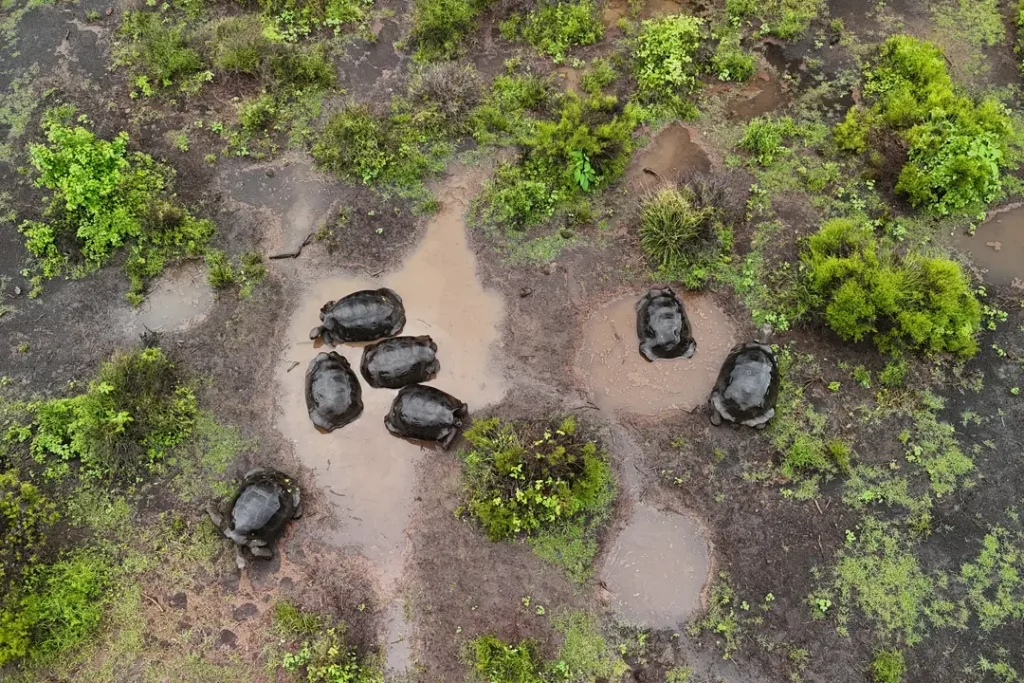
This is the win. There are about 12 living tortoise species, all threatened. The historical population ran to 200,000-300,000; today it’s roughly 20,000-25,000. But the trend reversed. Captive breeding since 1965 has returned 7,000-8,000+ animals to the wild, and Española’s tortoises came back from just 14-15 individuals to a self-sustaining population. That is what decades of unglamorous work looks like.
Is "Darwin's turtle" (Lonesome George) still alive?
No. Lonesome George, the last Pinta Island tortoise, died in June 2012. He became the symbol of extinction, but he was the last of his species, not the last tortoise. Twelve species remain. The distinction matters, because “the tortoise went extinct” is a myth that undersells the recovery still underway.
How many Galápagos penguins are left?
The data carries an estimate of about 2,000-3,000 birds, and I’d treat it as a range, not a settled count. Roughly 95% live around Fernandina and western Isabela. The catch: El Niño years crash the numbers hard, so any figure is a snapshot. The flightless cormorant is in the same boat – NW Isabela and E Fernandina only, roughly 1,600-2,400 birds.
"Rarity a deserves
a future."
What conservation success stories have actually worked?
Eradications and island restoration (Project Isabela, Floreana)
Project Isabela removed feral goats and pigs from northern Isabela and Pinta by about 2006, one of the largest island-restoration efforts of its kind. Rats were eradicated from Pinzón in 2012, and from Rábida and North Seymour. On Pinzón, tortoise hatchlings survived in the wild for the first time in over a century afterward. Floreana restoration is underway now (tortoise reintroduction 2024-2026), and the Galápagos rail, long thought gone from the island, was rediscovered there in 2025. Santiago’s land iguanas were reintroduced in 2019. Underpinning all of it: captive breeding running since 1965.
1965
Captive breeding running since 1965.

~2006
Project Isabela removed feral goats and pigs from northern Isabela and Pinta by about 2006

2012
Rats were eradicated from Pinzón in 2012

2019
Santiago’s land iguanas were reintroduced in 2019.

2024–2026
Floreana restoration is underway now (tortoise reintroduction 2024-2026)
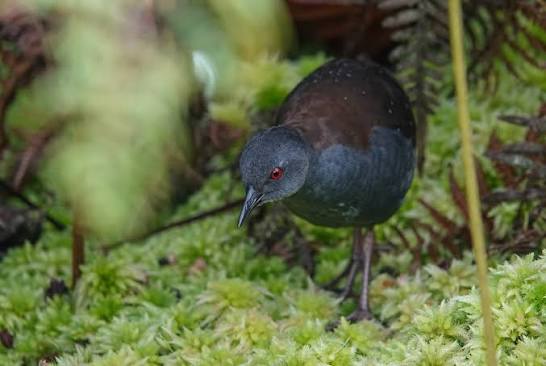
2025
The Galápagos rail, long thought gone from the island, was rediscovered there in 2025.
How does your visit affect conservation - and which itineraries reach the recovery sites?
The rules every visitor follows (fees, distances, biosecurity)
Everyone pays and everyone follows the same rules. The National Park entry fee is US$200 for most foreign adults (raised 1 Aug 2024), plus an INGALA transit control card of about US$20. Biosecurity is enforced: no drones, no fresh produce or seeds, sniffer-dog teams at the airports. In protected areas you need a GNPS-licensed naturalist guide, you stay at least 2 m from wildlife, and you take nothing – no shells, rocks or sand.
Which visitor sites let you see the rarest endemics
This is where choosing your trip matters. Day-trips from the inhabited islands reach only about one-third of visitor sites. The western sites, where the penguins and flightless cormorants actually live, require a multi-day cruise. The flightless cormorant’s home turf includes Fernandina’s Punta Espinoza (snorkel, panga, dive, walk) and west-Isabela sites like Punta Vicente Roca, Punta Moreno and Bahía Elizabeth. There’s no single “best” choice. But if seeing the recovery species is your reason for coming, a longer itinerary that reaches the west is the trade-off you’re making. Santiago’s reintroduced land iguanas sit within reach of more standard central routes.
"Rarity deserves
a future."
Rarest endemics: where they live, status & whether a cruise or day-trip reaches them
Mangrove Finch
Where it lives: NW Isabela only
Status: About 20–100 · Rarest bird
Reachable by: Permit-restricted · Not a standard visitor site
Pink Land Iguana
Where it lives: Wolf Volcano, Isabela only
Status: About 350 · Critically Endangered
Reachable by: Permit-restricted · Not open to visitors
Galápagos Penguin
Where it lives: Fernandina & West Isabela (about 95%)
Status: About 2,000–3,000
Reachable by: Multi-day cruise to western sites
Flightless Cormorant
Where it lives: NW Isabela & East Fernandina only
Status: About 1,600–2,400
Reachable by: Multi-day cruise · Punta Espinoza & West Isabela
Giant Tortoise
Where it lives: Multiple islands · Recovery sites include Española & Santa Cruz
Status: About 20,000–25,000 · Recovering
Reachable by: Breeding centres on most itineraries
Land Iguana
Where it lives: Santiago
Status: Reintroduced in 2019
Reachable by: Central-route cruises
Found only here
Where it lives
Status / estimate
Reachable by
NW Isabela only
about 20-100, rarest bird
Permit-restricted – not a standard site
Pink land iguana
Pink land iguana
about 350, Critically Endangered
Permit-restricted – not open to visitors
Key takeaways
About 97% of the land is national park; the marine reserve spans about 138,000 km², expanded by 60,000 km² in 2022.
The biggest threat is invasive species: rats, goats, cats, fire ants and the Philornis downsi fly - not tourism.
The rarest animal is the mangrove finch (about 20-100), not the tortoise.
Giant tortoises are the standout recovery: 7,000-8,000+ returned to the wild since captive breeding began in 1965.
Remove the invasive and natives rebound. Project Isabela, Pinzón rats, Floreana restoration all prove it.
The recovery species you can actually see - penguins and flightless cormorants - need a multi-day cruise to the western islands.
How to Book a Conservation Journey
Plan Your Galápagos Journey
Galapagos Travel Trade Services
Frequently Asked Questions
The rarest is the mangrove finch, not the giant tortoise as many assume. Only about 20-100 survive, confined to a few mangrove stands on northwest Isabela. The pink land iguana runs close behind, roughly 350 animals on Wolf Volcano only, Critically Endangered.
No. Lonesome George, the last Pinta Island tortoise, died in June 2012. He was the last of his species, but not the last tortoise. About 12 giant-tortoise species remain across the archipelago, all threatened but several actively recovering.
The data carries an estimate of roughly 2,000-3,000 birds; treat it as a range, not a fixed 2026 count. About 95% live around Fernandina and western Isabela. El Niño years crash the numbers, so any single figure is a snapshot in time.
Major wins include Project Isabela’s goat and pig eradication (by about 2006), rat eradications on Pinzón (2012), Rábida and North Seymour, Floreana restoration (2024-2026), and captive tortoise breeding running since 1965 that has returned 7,000-8,000+ animals to the wild.
We don’t have a verifiable fact on this in our sources, so we won’t assert one. What is certain: the same rules apply to every visitor – the US$200 park fee, GNPS-certified guides, wildlife-distance and biosecurity rules – regardless of who you are.
Invasive species, by a clear margin: introduced rats, goats, pigs, cats, fire ants and the bird vampire fly Philornis downsi, plus invasive plants. Overfishing, plastic pollution and El Niño events add further pressure, but invasives remain the number-one problem, not tourism.
Explore More
Discover more islands, plan your journey, and learn everything you need for the perfect Galápagos trip.
Related Guides
- Best Time to Visit the Galápagos
- How seasons shape wildlife activity
- Galápagos Cruise vs Land-Based: Which Is Right for You?
Connected Guides
- How far each option actually reaches
- Galápagos Islands Guide: Which Island Is Which
- Where each endemic lives