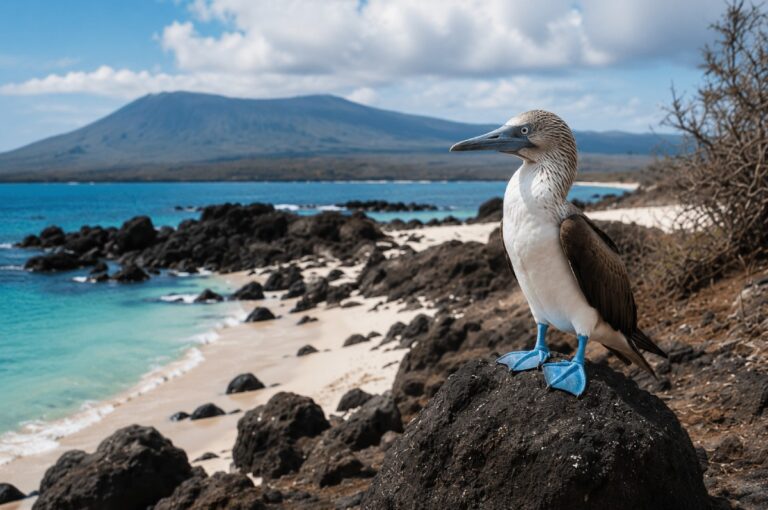
Galapagos Wildlife: A Species Guide for Every Traveler
Wildlife at a Glance
The Galapagos Islands are one of the world’s most remarkable wildlife destinations. Their isolation, volcanic landscapes, and unique marine conditions have allowed species to evolve in extraordinary ways, creating encounters that cannot be experienced anywhere else
Total species
The Galapagos Islands are home to more than 15,000 recorded species.
Endemic species
Around 80% of land birds and 97% of reptiles are endemic to the archipelago.
Iconic species
Giant tortoises, marine iguanas, blue-footed boobies, sea lions, and Galapagos penguins are among the islands’ most recognizable animals.
Why Galapagos Wildlife Is Unlike Anywhere Else
No instinctive fear: Many animals allow visitors to observe them at close range because they evolved with few natural predators.
Extreme endemism: Many Galapagos species and subspecies are found nowhere else in the world.
For Travel Agents & Tour Operators
Latin Trails operates wildlife-focused private expeditions for incentive groups, photographers, and researchers. Net rates and custom programs available for trade partners.
What is the most famous animal in the Galapagos Islands?
The Galapagos giant tortoise is one of the archipelago’s most recognizable animals, although marine iguanas, blue-footed boobies, sea lions, and Galapagos penguins are also widely known.
Are Galapagos animals afraid of humans?
Many species show little instinctive fear of people because they evolved with few natural predators. Visitors must still maintain the required distance and follow guide instructions.