Ultimate Guide To Galapagos Islands Cruises

A Galápagos cruise is the best way to access the archipelago's wildlife, most visitor sites are reachable only by overnight vessel. Cruises range from 4 to 15 days and $2,500 to $20,000+ per person across four tiers: ultra-premium yachts (8–16 pax), luxury small ships (20–100 pax), first-class expedition vessels (16–20 pax), and mid-range/budget vessels.

Choose Your Cruise Type

alya-cruises-photo

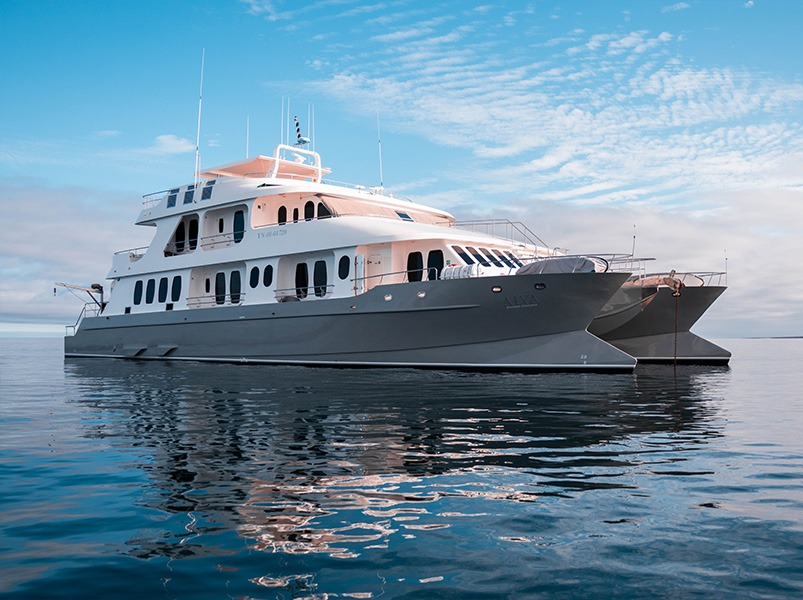
Luxury Expedition Yachts

8–48 passengers | $7,500–$20,000+ per person | Small groups, expertly assigned guides, flexible itineraries

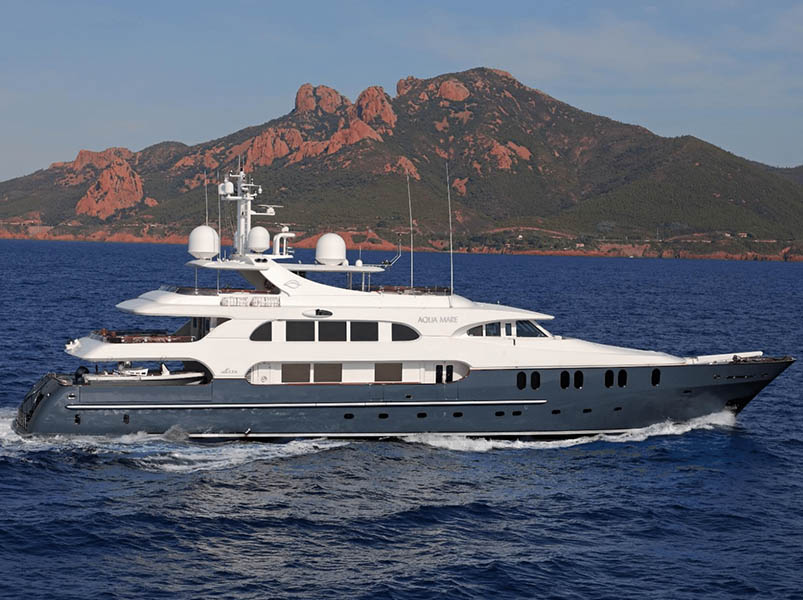
Groups this small are rare in the archipelago, and that scarcity translates directly into site access. Yachts like the 16-passenger Aqua Mare run roughly 1:1 staff-to-guest ratios. Travelers on standard departures do not choose their guide — the operator assigns them. The vessel you choose is the guide choice.

pinta-cruises-photo

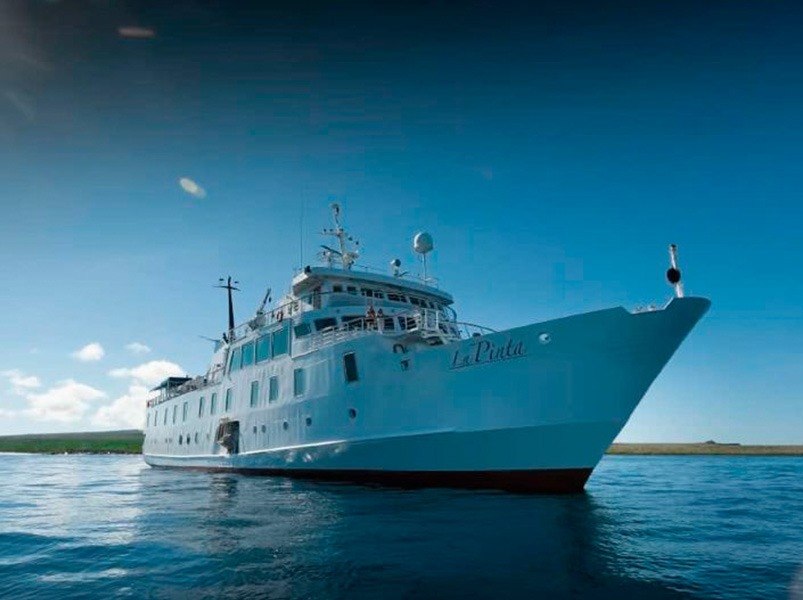
Premium Fleet Ships

48–100 passengers | $5,500–$10,000 per person | Full amenities, multiple naturalist guides, broad itineraries

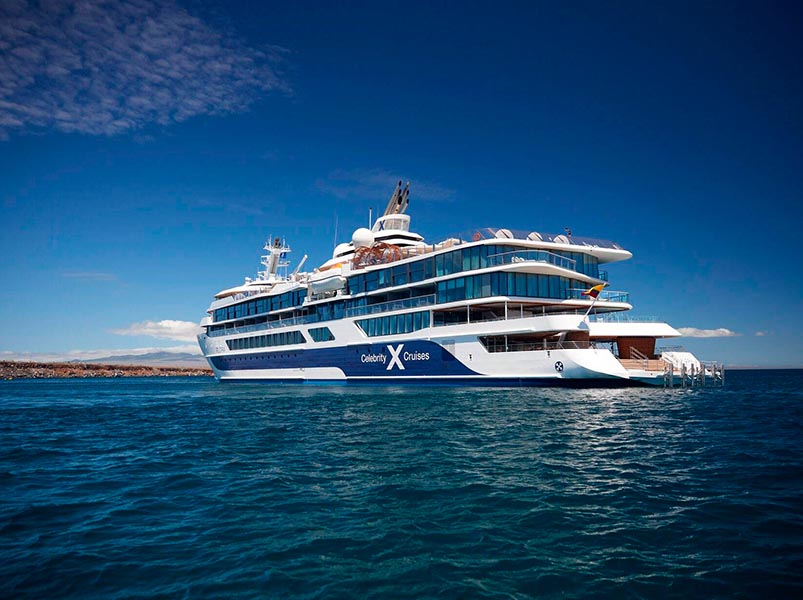
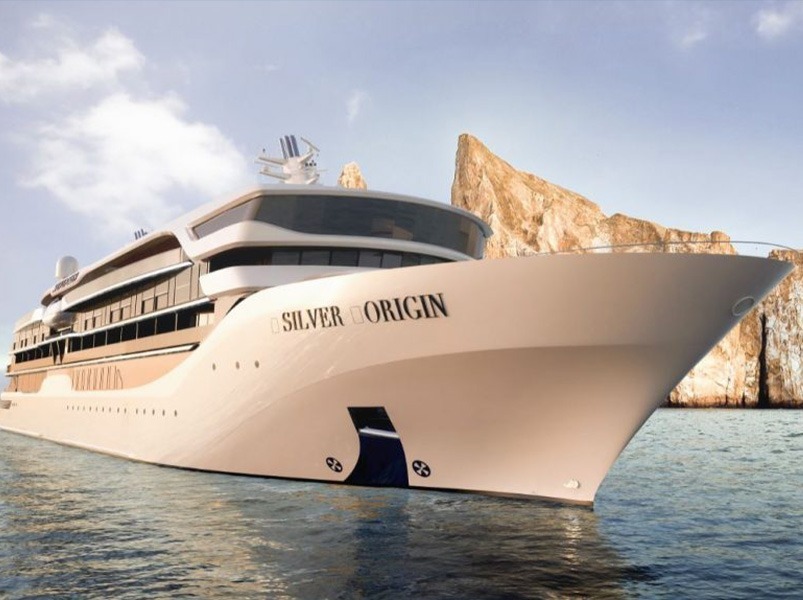
The Silver Origin (Silversea, 100 passengers) and Celebrity Flora (100 passengers) are among the most luxurious vessels in the archipelago. Size affects logistics — a 100-passenger ship must break landing groups into shifts — but is a logistical variable, not a quality ranking.

Calipso | Galapagos Cruise

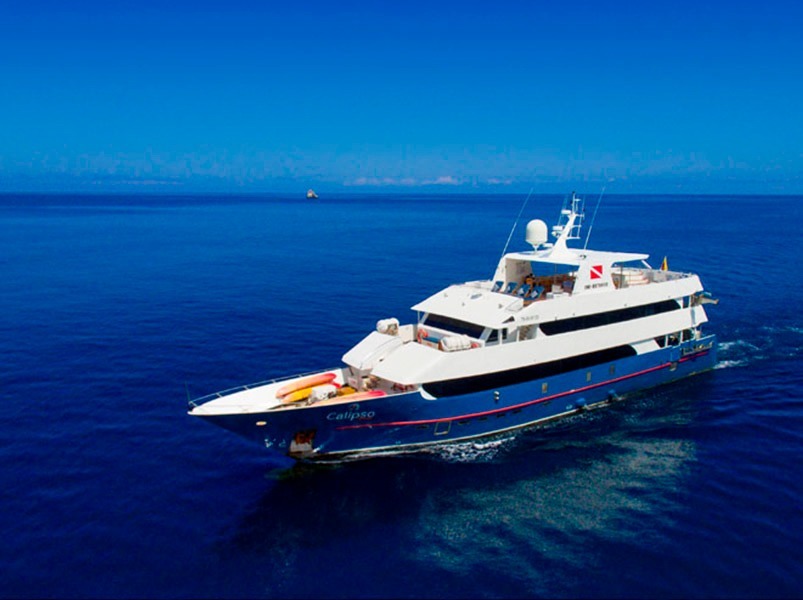
Mid-Range Expedition Vessels

40–90 passengers | $4,500–$7,500 per person | Best value for wildlife access

For most serious travelers, this is where the numbers make sense. Larger vessels carry three or four naturalist guides — genuine specialization by interest. Itineraries including Fernandina, Genovesa, and west Isabela are well-represented here.

Archipel | Galapagos Cruise

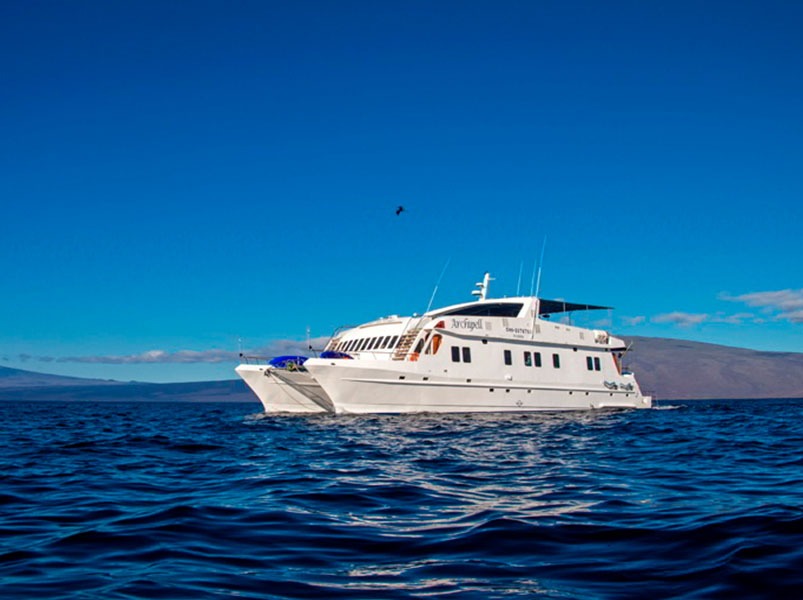
Budget Cruises

30–90 passengers | $2,500–$4,500 per person | Core wildlife access, no frills


These vessels visit the same National Park-authorized sites as premium ships. Cabins are smaller, amenities fewer — but the wildlife is indifferent to what you paid for your berth.

puerto-baquerizo-moreno-isla-san-cristóbal

Day Tours (Land-Based)

From inhabited islands | $80–$200/day | Limited to central island sites


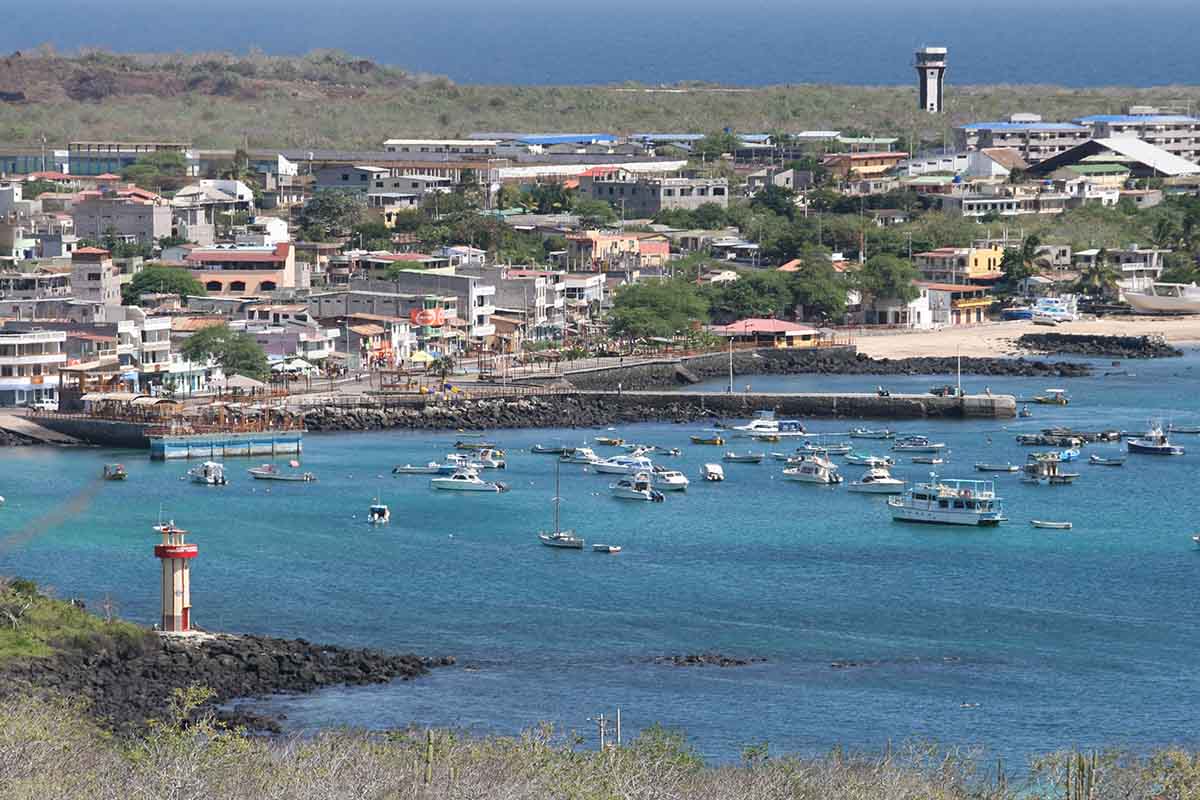
Day trips from Puerto Ayora, Puerto Baquerizo Moreno, and Puerto Villamil reach around a third of available visitor sites. Fernandina, Genovesa, and the outer islands require overnight cruise access — there is no workaround.

Vessels by Category

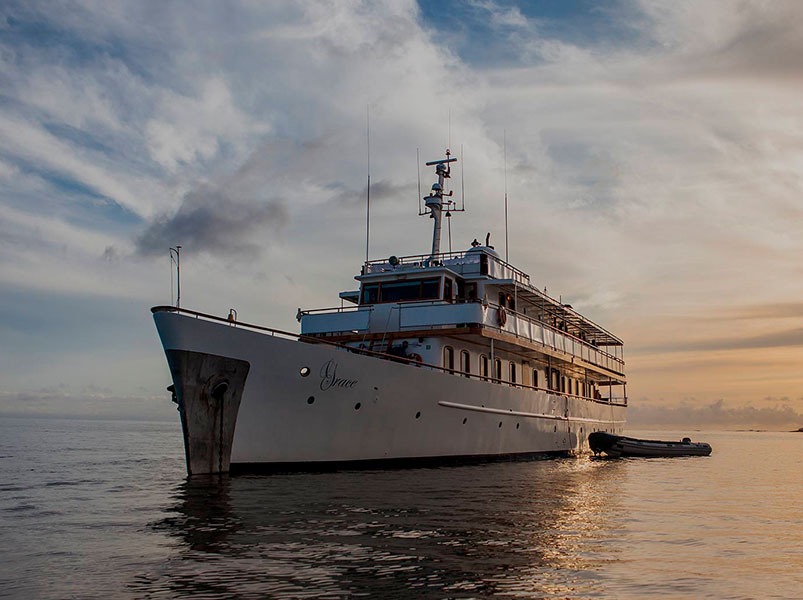
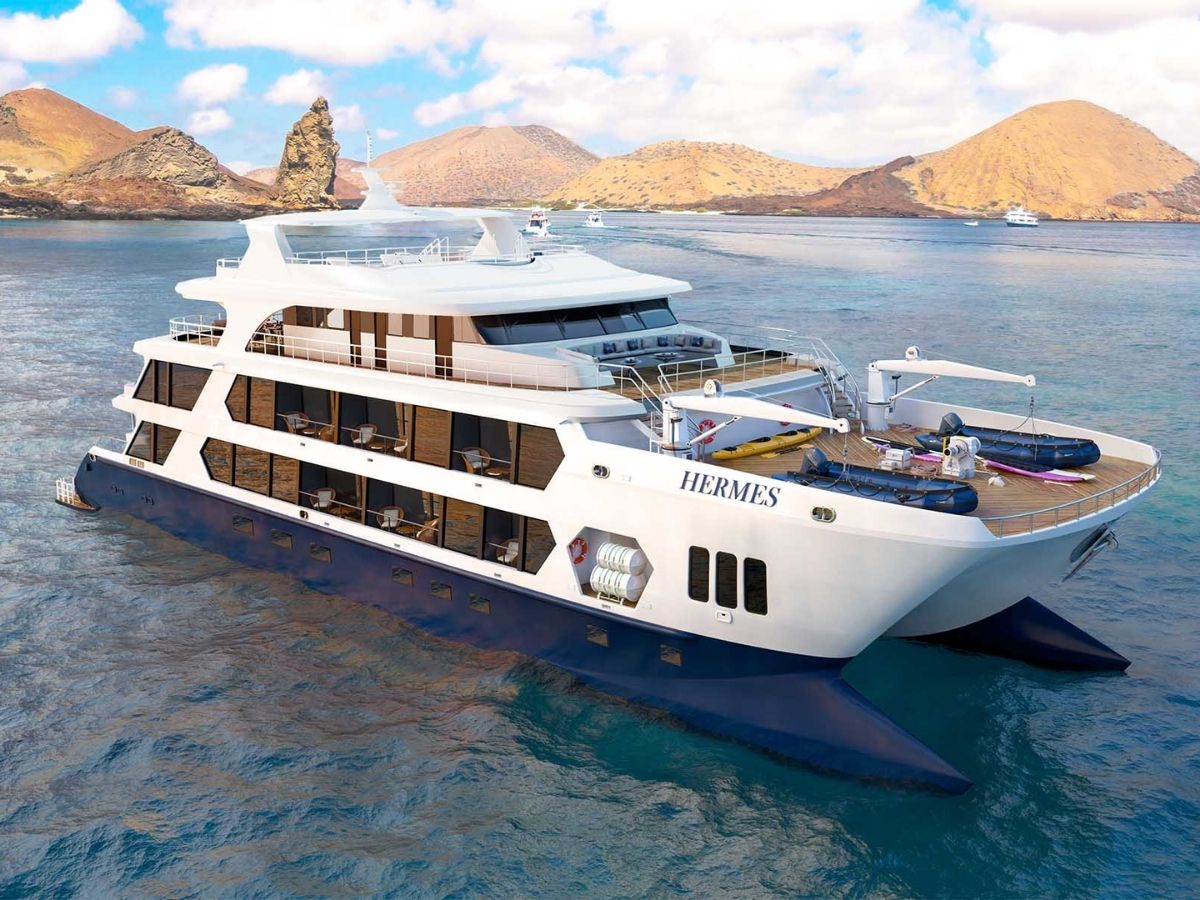
Galápagos cruise vessels fall into four tiers. Ultra-premium yachts (8–16 passengers): Aqua Mare, Quasar Grace, Samba, Hermes. Luxury small ships (20–100 passengers): Quasar Evolution, Ecoventura Origin/Theory/Evolve, Celebrity Flora and Silver Origin.

Which vessels fall into the first-class expedition category?

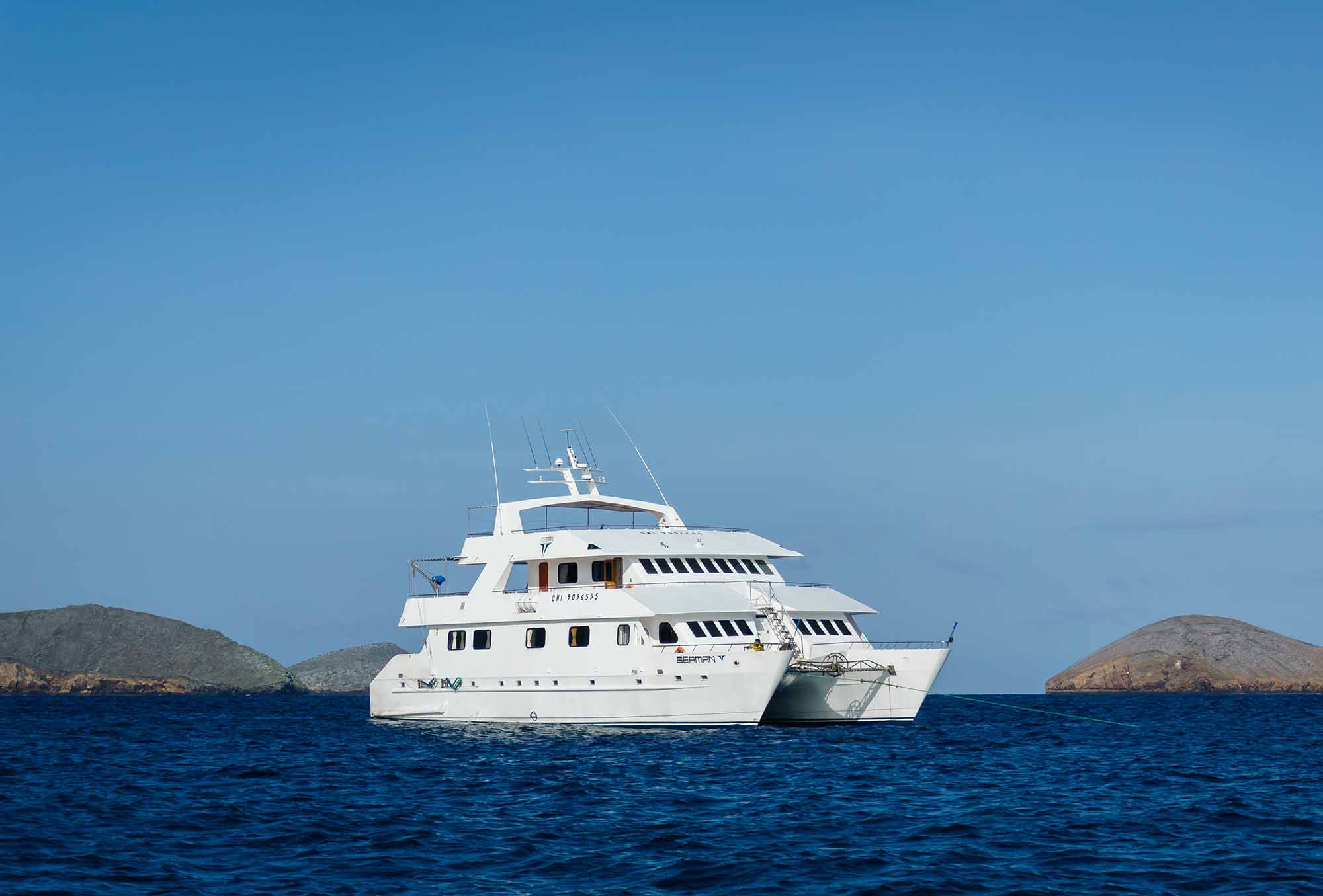
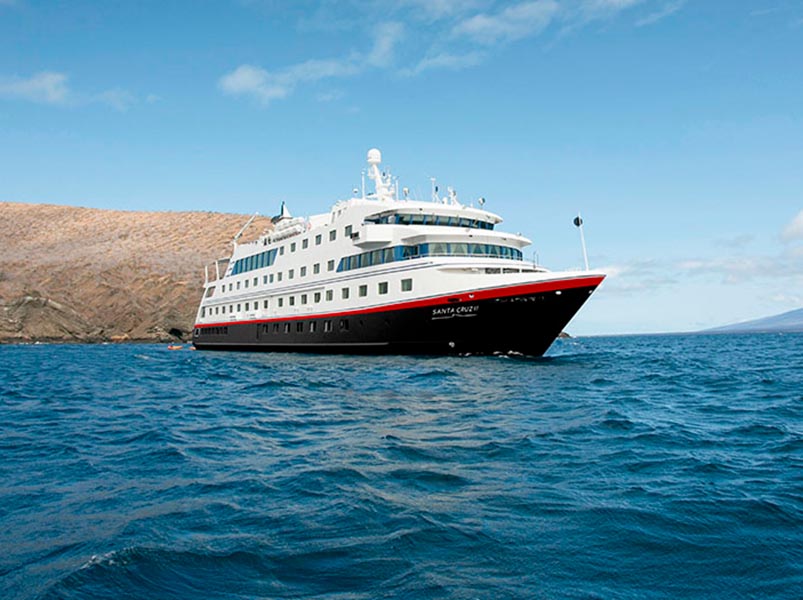
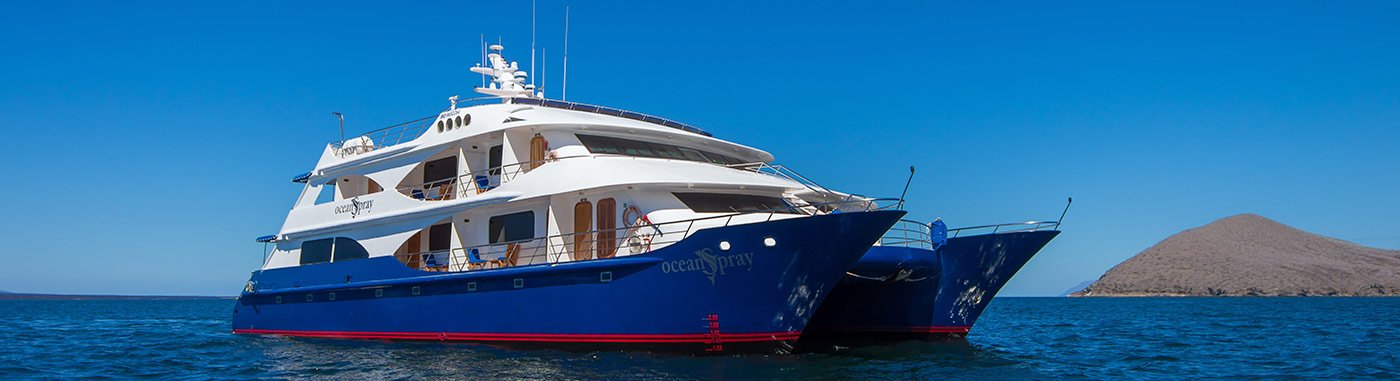
First-class expedition vessels include Galapagos Seaman Journey, HX Santa Cruz II, and Ocean Spray. Mid-range and budget vessels fill the remaining capacity.

Ultra-Premium Yachts (8–16 Passengers)

The most exclusive tier. Typically 2 naturalist guides for 16 guests or fewer. Entire group ashore simultaneously — no Zodiac queuing, no staggered rotations. Spontaneous schedule extensions when wildlife warrants. Shore parties at the scale of a good dinner table.


Note: Vessels in this tier may visit any permitted island. No tier has exclusive access to Fernandina, Genovesa, or Española — these islands represent three different compass directions, not a ‘western circuit premium.’

Luxury Small Ships (20–100 Passengers)

A wide tier spanning from 20-passenger Relais & Châteaux yachts to 100-passenger expedition ships at the legal maximum. What unites them: multiple naturalist guides, hotel-caliber amenities, and itineraries that can include the full archipelago.

Note: Silver Origin and Celebrity Flora sit at the 100-passenger legal maximum — more on-ship amenities, larger Zodiac shore parties by rotation. The logistics are different from a 16-passenger yacht; the wildlife encounter quality depends on the site, the guide, and the day — not the vessel’s size.

First-Class Expedition (16–20 Passengers)

Strong naturalist programs, intimate group sizes, and in several cases exceptional food — at a fraction of ultra-premium cost. This tier is frequently misunderstood as mid-range. It is not. The guide quality, food programs, and itinerary reach of the leading first-class expedition vessels rival most of what the luxury tier claims.

Finding the Right Vessel for You

Galápagos cruise vessels fall into four tiers. Ultra-premium yachts (8–16 passengers): Aqua Mare, Quasar Grace, Samba, Hermes. Luxury small ships (20–100 passengers): Quasar Evolution, Ecoventura Origin/Theory/Evolve, Celebrity Flora and Silver Origin.

Which vessels fall into the first-class expedition category?

First-class expedition vessels include Galapagos Seaman Journey, HX Santa Cruz II, and Ocean Spray. Mid-range and budget vessels fill the remaining capacity.

Traveler Type

Recommended Tier

Why

Wildlife-first, maximum time ashore
First-class expedition — 16–20 pax (Seaman Journey, HX Santa Cruz II, Ocean Spray)
Guides as strong as any in the archipelago. Food often exceptional (Seaman Journey’s hydroponic farm sets a specific standard). Fraction of ultra-premium cost.
Luxury amenities + strong nature program
Large-ship luxury — 100 pax (Silver Origin, Celebrity Flora)
Suite cabins, multiple dining venues, butler service. Shore parties rotate by Zodiac — a different rhythm, equally valid
Deep nature immersion, value-conscious
First-class expedition — 16–20 pax (Seaman Journey, HX Santa Cruz II, Ocean Spray)
Guides as strong as any in the archipelago. Food often exceptional (Seaman Journey’s hydroponic farm sets a specific standard). Fraction of ultra-premium cost.

Compare by Trip Length

santa-cruz-island-galapagos sea lion

4–5 days

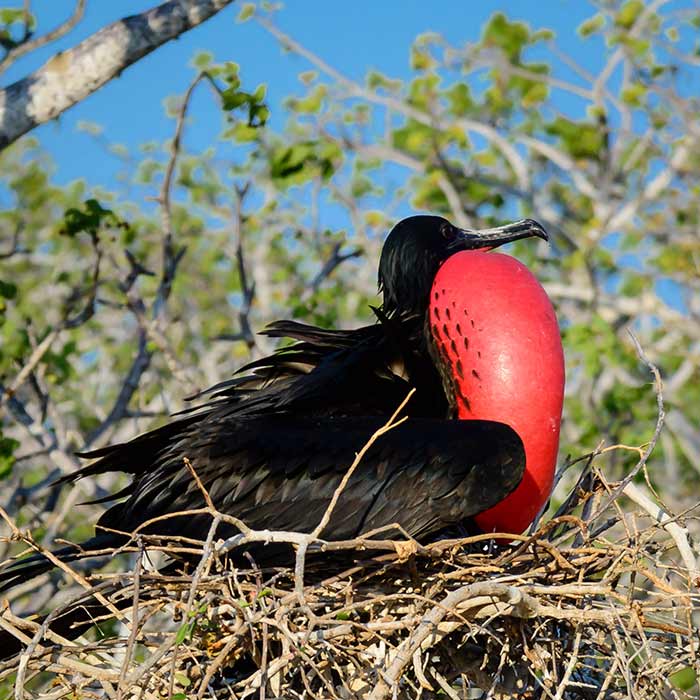
Frigate | North Seymour Island

7–8 days

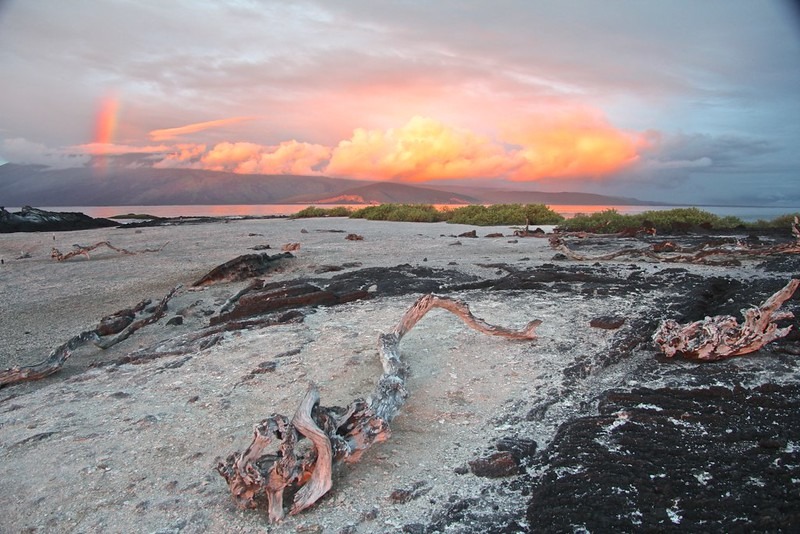
Espinoza Point | Fernandina Island

10–15 days

Cruise vs. Land-Based — The Honest Answer

Wildlife access favors a cruise. Budget favors land-based. Which of those matters more to you is the actual question.

The Galápagos National Park operates under a strict visitor-site rotation — only licensed overnight vessels can access most of the better sites. Day-trip boats from Puerto Ayora reach perhaps a third of what is available. Places like Espinoza Point on Fernandina, Suárez Point on Española, or Darwin Bay on Genovesa require an overnight expedition cruise. There is no workaround.Lorem ipsum dolor sit amet, consectetur adipiscing elit. Ut elit tellus, luctus nec ullamcorper mattis, pulvinar dapibus leo.

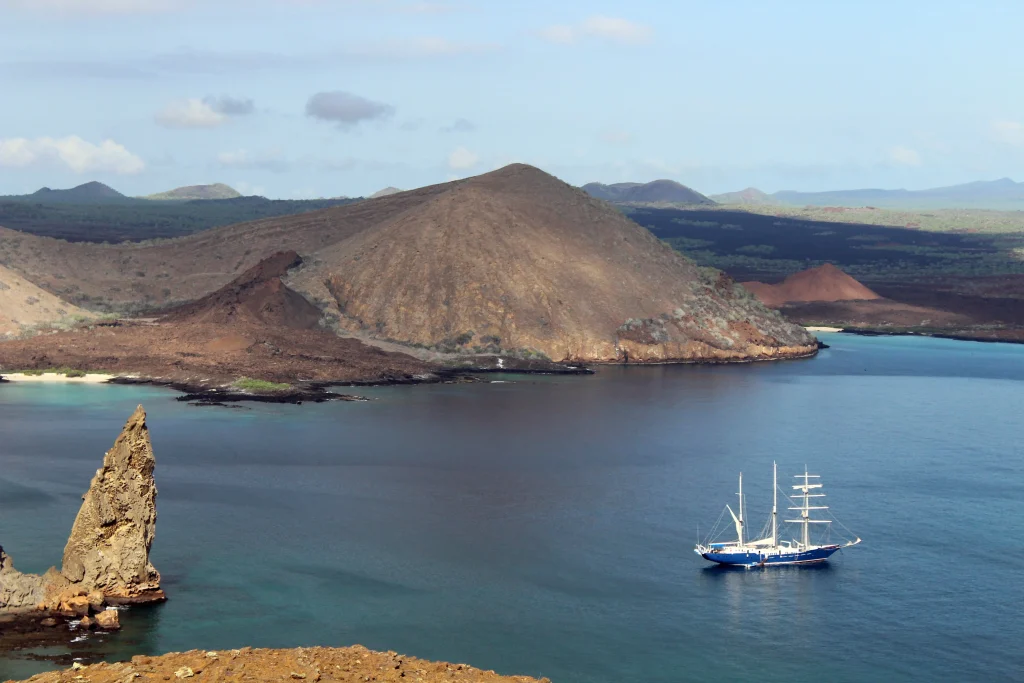
Discovered in 1535, Galápagos has fascinated explorers and scientists. Bartolomé Island, with its volcanic landscape and crystal-clear waters, is a symbol of its unique beauty.

Regulations & Fees

All visitors to the Galápagos pay:

$200 USD

Galápagos National Park entrance fee (paid on arrival)

$20 USD

Galápagos Transit Control Card (Purchased at mainland airport before departure)
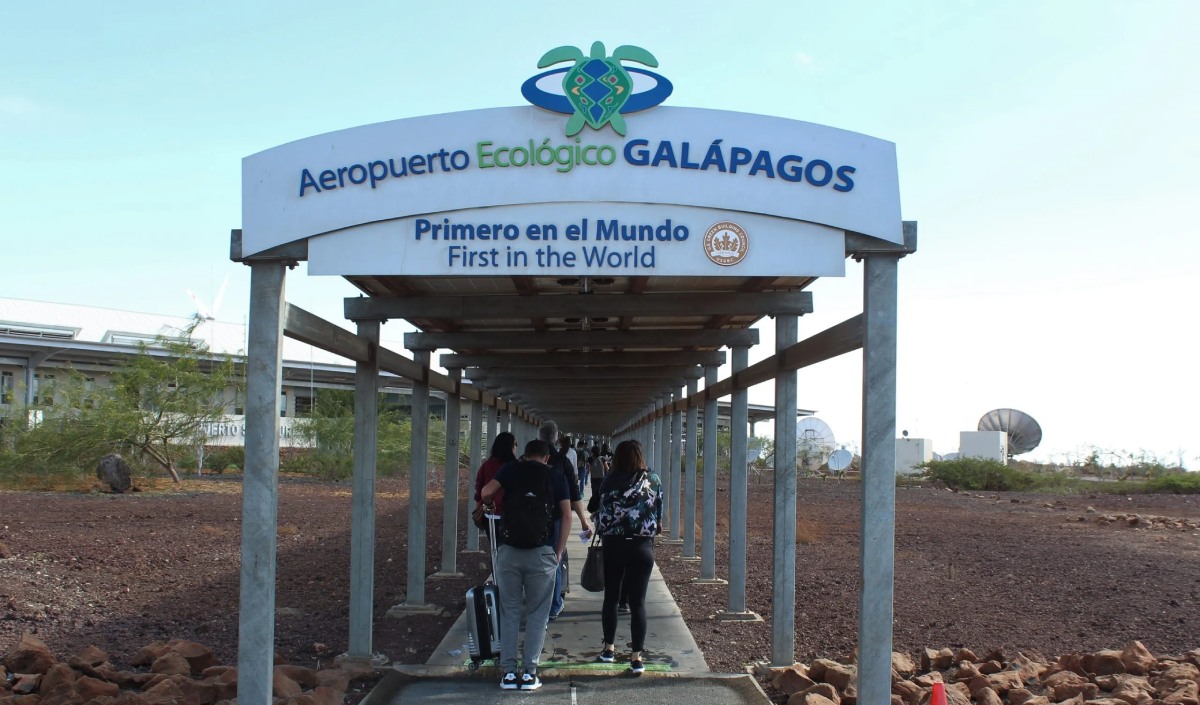
ecologic-airport-baltra-galapagos

How to Book

Book direct with a licensed operator or through a specialized Galápagos travel company — not through generic online travel agencies that aggregate cruise inventory without vetting licensing status. Premium cabin categories on luxury yachts sell out 6–12 months ahead.

alya-cruises-photo

Get a Free Galápagos Cruise Quote — Voyagers Travel Company

Voyagers Travel Company’s specialists match travelers to the right vessel, itinerary, and dates — with current availability across all cruise categories.Lorem ipsum dolor sit amet, consectetur adipiscing elit. Ut elit tellus, luctus nec ullamcorper mattis, pulvinar dapibus leo.

Request Trade Pricing — Latin Trails (DMC Partner)

Latin Trails is a licensed Galápagos DMC offering net rates, group allocations, and private charter options for tour operators and wholesalers.

Frequently Asked Questions

What is the best Galápagos cruise for first-time visitors?

A 7–8 day mid-range expedition vessel on a central-southern circuit is the most common recommendation. The balance of cost, coverage, and wildlife access is hard to beat at this length. First-time visitors typically see giant tortoises, marine iguanas, sea turtles, sea lions, land iguanas, blue-footed boobies, and penguins without needing Fernandina, Genovesa, or west Isabela at all.


How far in advance should I book a Galápagos cruise?

Luxury small-ship cabins: 6–12 months in advance for preferred dates. Mid-range vessels: 3–6 months. Last-minute availability (30–90 days out) is possible on larger vessels, often with 20–40% discounts. High season (June–November) books faster than low season.

What is included in a Galápagos cruise?

All meals, all excursions at National Park visitor sites, all snorkeling equipment, and naturalist guide services. Not included: flights to/from Galápagos, the $200 park entrance fee, the $20 Transit Control Card, alcoholic beverages, and tips. Wetsuit rental is typically available onboard at extra cost.

Is a Galápagos cruise worth the cost?

For wildlife travelers, consistently yes. The combination of fearless endemic wildlife, guided interpretation by certified naturalists, and access to sites unreachable by day trips is difficult to find anywhere else. The cost-to-encounter ratio is strongest on mid-range and first-class expedition vessels at 7–8 days.

What types of Galápagos cruise vessels exist?
Four tiers: ultra-premium yachts (8–16 pax, $12,000–$20,000+ pp, examples: Aqua Mare, Quasar Grace, Hermes), luxury small ships (20–100 pax, $5,500–$15,000 pp, examples: Ecoventura Origin/Theory/Evolve, Silver Origin, Celebrity Flora), first-class expedition (16–20 pax, $4,000–$8,000 pp, examples: Galapagos Seaman Journey, HX Santa Cruz II, Ocean Spray), and mid-range/budget (16–90 pax, $2,500–$7,000 pp). All tiers access the same GNPA-regulated visitor sites — what varies is group size, amenities, and guide ratio

Explore More

Discover more islands, plan your journey, and learn everything you need for the perfect Galápagos trip.

Explore by Cruise Type

Vessel Pages:

Plan Your Cruise:

Need Help?

Our Galapagos specialists are here to help you plan the perfect adventure.